


 Catalog
 Exploded views
















 Honda Marine


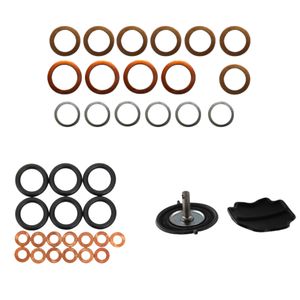
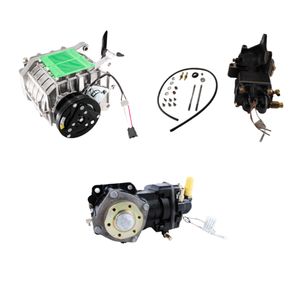
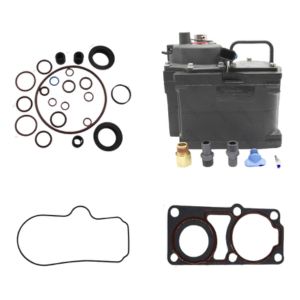
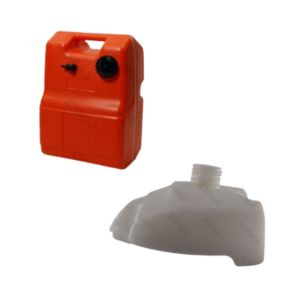






 Parts views
 Technical documents
 Ask for a quote
 Return request
Find water pumps, thermostats, heat exchangers and cooling parts for boat engines.
A boat engine cooling system is the system that keeps the engine within the correct operating temperature range. It collects the heat produced by combustion and friction, then removes it using outside water or coolant. A direct cooling system sends seawater through the engine, while an indirect system uses a heat exchanger. Poor water flow, a worn impeller, a stuck thermostat or a clogged exchanger can quickly cause overheating.
What is a boat engine cooling system used for?
A boat engine cooling system prevents the engine temperature from rising beyond an acceptable range. An engine naturally produces heat while it runs: combustion, internal friction, higher rpm and the load required by propulsion all generate heat. Cooling does not eliminate this heat; it channels it so it does not damage the oil, gaskets, cylinder head or other sensitive parts.
Its role is simple: circulate a cooler fluid near the hot areas, absorb the heat, then remove that heat from the engine. This is what keeps the mechanical assembly reliable, stable and durable, whether the boat has an outboard or an inboard engine.
How does a boat engine cooling system work?
The system works through continuous circulation. Outside water or coolant is moved by a pump, passes through the areas that need cooling, flows through a regulating component such as the thermostat, then is discharged or cooled again depending on the type of system.
On a marine engine, the exact path varies depending on the design, but the logic is always the same: intake, circulation, heat exchange, regulation and discharge. To place this system within the overall mechanics of the boat, you can also read our guide to the boat propulsion system.
Key point: if the fluid does not circulate properly, heat remains trapped in the engine. That is why a simple lack of flow can be enough to trigger a temperature alarm or a more serious failure.
What is the difference between direct and indirect cooling on a boat?
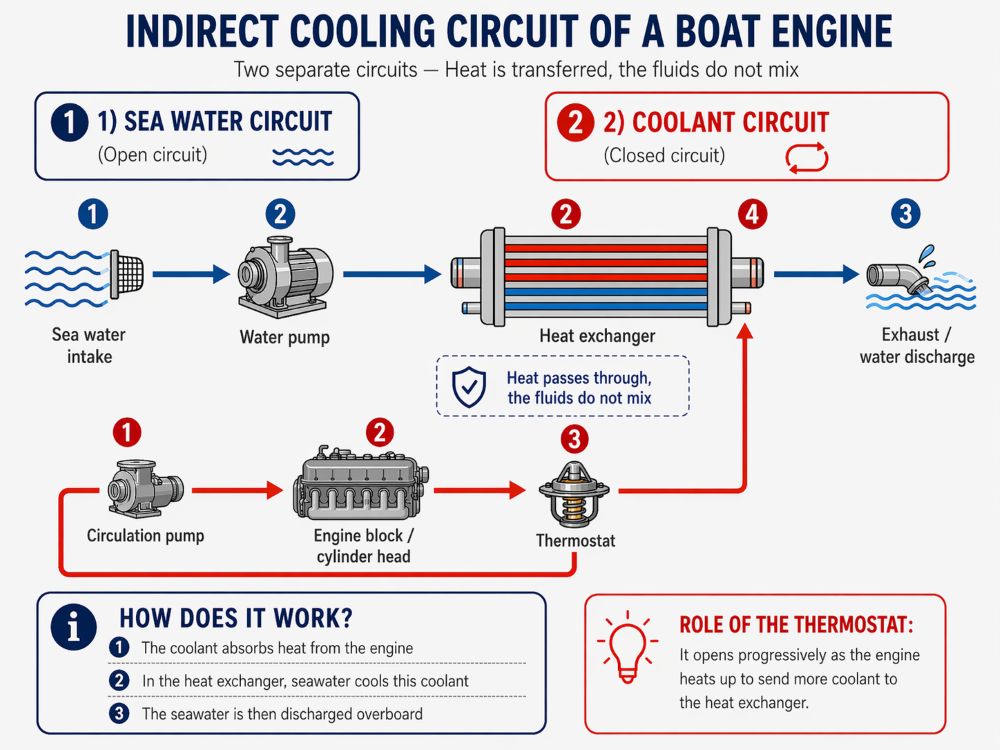
The main difference is whether the outside water comes into contact with the engine. In direct cooling, the water taken from outside circulates through the engine before being discharged. In indirect cooling, the engine uses a closed circuit filled with coolant, and outside water only cools this coolant through a heat exchanger.
How does direct cooling work?
Outside water enters the system, collects heat as it passes through hot areas, then leaves the engine. The system is simple, but it exposes internal passages more directly to salt, deposits and corrosion.
How does indirect cooling work?
Coolant circulates inside the engine and transfers its heat to a heat exchanger. Outside water passes through the exchanger without mixing with the closed-circuit coolant.
Which setup is found on different engines?
Direct cooling is common on many outboards. Indirect cooling is very common on inboard or marinised engines because it protects certain internal parts more effectively.
The choice of engine therefore has a strong impact on the cooling architecture. If you are hesitating between two configurations, the guide to choosing between an inboard and outboard engine can help you understand the differences in use, maintenance and mechanical access.
For a broader view of engine selection, the guide to choosing an engine for your boat also complements this comparison.
Where does water enter the cooling system?
Water enters through an intake suited to the engine type. On an outboard, suction is generally through the water intakes located on the lower unit. On an inboard, water often passes through a through-hull fitting, a seacock, then a strainer or seawater filter before reaching the pump.
What is the role of the water intake?
It supplies the system with outside water. If it is blocked by seaweed, a plastic bag, sand or deposits, flow decreases and cooling becomes insufficient.
What are strainers and grilles used for?
They limit the entry of large debris into the system. They do not replace maintenance, but they reduce the risk of rapid blockage.
Why does an inboard have more components?
An inboard often uses a separate water intake, a seacock, a hose and a filter. The system is longer, but each component can be checked separately.
How does the water pump circulate water through the system?
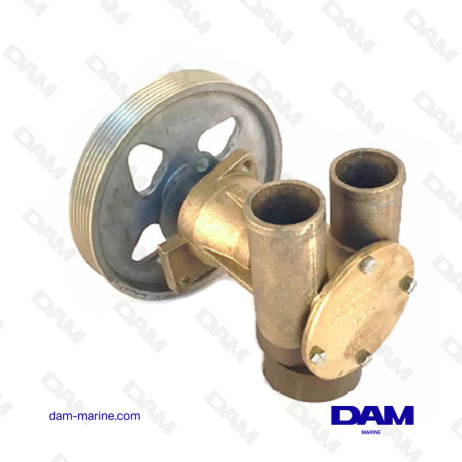
The water pump sets the fluid in motion. Without it, water or coolant cannot circulate correctly and heat remains concentrated in the engine. It must maintain sufficient flow even when engine speed, load and navigation conditions vary.
What is the role of the impeller?
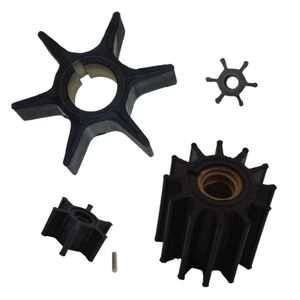
The impeller, often made of flexible rubber, creates suction and pushes the water. It is a major wear part: over time, its blades can crack, deform or lose efficiency.
Why is the impeller sensitive?
It does not tolerate dry starts, long periods without use or very dirty water. A worn impeller may still turn, but deliver too little flow.
What happens if the pump works poorly?
The engine may heat up gradually or very quickly. A weak water jet, no tell-tale flow or a temperature alarm are all reasons to check the pump and impeller.
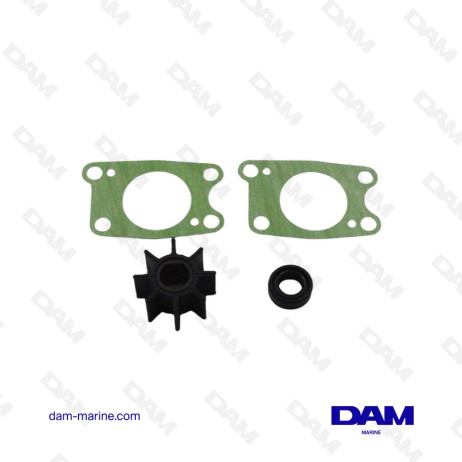
Check the system’s wear parts before insufficient flow causes overheating.
How does water circulate inside the boat engine?
Once it is moving, water or coolant is directed toward the hot parts of the engine. On an outboard, the fluid usually rises from the lower unit to the powerhead. On an inboard, it follows the hoses and passages of the system before reaching the block, cylinder head and areas that need cooling.
What do the block and cylinder head cool?
These are areas where heat is very high. The fluid circulates around the cylinders and combustion chambers to absorb heat as close as possible to where it is produced.
What are water jackets?
Water jackets are internal passages designed to let fluid circulate around hot areas. They ensure regular heat transfer inside the engine.
Why is steady circulation important?
A poorly supplied area can overheat locally before the issue becomes general. Deposits, blockages or lack of flow can therefore create progressive overheating.
The principle remains similar on a marine diesel engine or a boat petrol engine, even though the installation details always depend on the model and manufacturer.
What is the thermostat used for in a boat engine cooling system?
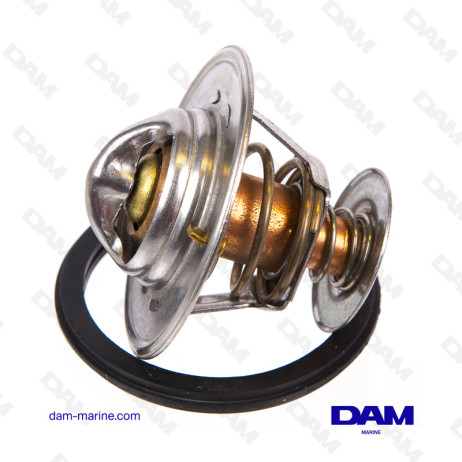
The thermostat, also called a calorstat, regulates engine temperature. When cold, it stays closed or partly closed so the engine can warm up properly. Once the target temperature is reached, it gradually opens to allow more fluid to circulate.
Why does it stay closed when cold?
An engine that is too cold does not operate under ideal conditions. The thermostat therefore limits circulation at first to speed up warm-up.
When does it open?
It opens when the fluid reaches a defined temperature. The opening is progressive, preventing sudden temperature changes.
What happens if it sticks?
Stuck closed, it can cause rapid overheating. Stuck open, it can prevent the engine from reaching the correct operating temperature.
Checking the thermostat is therefore one of the logical checks when an engine overheats, warms up too slowly or shows unstable temperature.
What is the role of the heat exchanger in a boat cooling system?
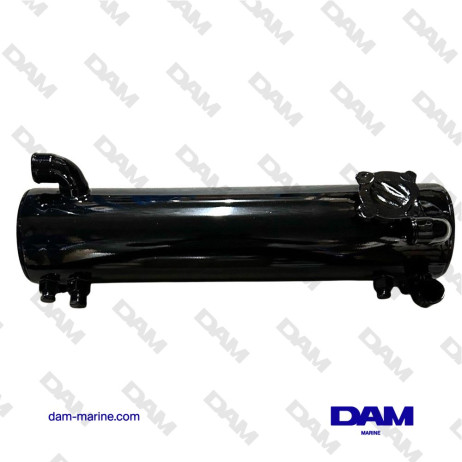
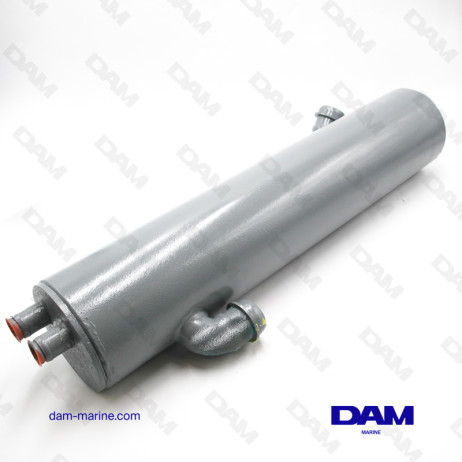
The heat exchanger is used on indirect systems. It allows the coolant in the closed circuit to lose heat without mixing with outside water. The two fluids circulate separately, and heat transfers from one to the other through an exchange surface.
What is the difference between internal and external circuits?
The internal circuit contains the coolant that passes through the engine. The external circuit uses seawater or outside freshwater to cool the exchanger.
Why does the exchanger limit corrosion?
Because saltwater does not circulate everywhere in the engine, some internal parts are less exposed to salt, deposits and corrosion.
What is an exchanger tube bundle?
The tube bundle is a set of small passages that encourage heat transfer. It is efficient, but it can become clogged and reduce cooling performance.
If your engine uses this setup, heat exchangers for boat engines are among the parts that deserve close attention.
How is water discharged at the end of the system?
Once the heat has been absorbed, the water is discharged outside. On many marine engines, it joins the exhaust line to remove heat and cool certain parts of the exhaust. On many outboards, a tell-tale stream also serves as a visual circulation indicator.
Why does water leave through the exhaust?
This solution removes hot water while lowering the temperature of certain parts of the exhaust line.
What is the tell-tale stream used for?
It shows that water circulation exists. By itself, it does not guarantee that the whole system is perfect, but its absence should be a warning.
How can abnormal flow be recognised?
A weaker, irregular or absent discharge compared with normal behaviour can indicate an intake, pump, impeller or clogging problem.
Which parts make up a boat engine cooling system?
A boat engine cooling system brings together several families of parts. The intake side includes the water intake, lower-unit intakes, through-hull fitting, seacock and strainer depending on the setup. Circulation then depends on the water pump, impeller, rotor, hoses and passages.
Regulation and heat exchange rely on the thermostat, thermostat housing, exchanger, oil cooler on some engines, expansion tank and coolant on closed systems. Finally, the water discharge, cooled exhaust and tell-tale stream allow water removal and visual control.
If an oil cooler is fitted, an abnormal trace may also point to a boat oil leak, which should be distinguished from a simple cooling-water leak.
What is the role of coolant on a boat?
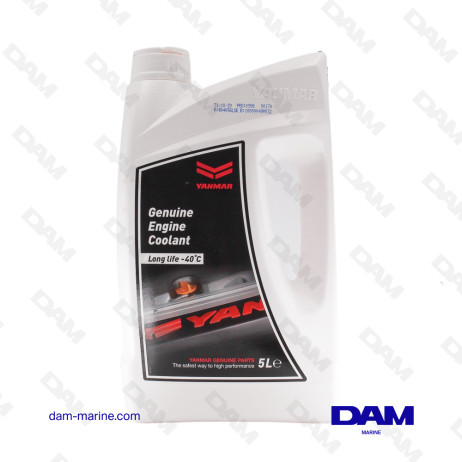
Coolant mainly concerns indirect or closed systems. It circulates through the engine, absorbs heat, then transfers it to the exchanger. It should therefore not be confused with outside water, which is used separately to cool the exchanger.
Why not use only water?
Water alone does not protect the closed circuit enough. A suitable coolant helps limit internal corrosion, freezing and thermal variations.
What else does it do besides cooling?
It protects passages and certain metal surfaces against ageing. It is a technical fluid, not just a heat carrier.
What is the link with frost and winterisation?
Coolant that is too old or insufficient can reduce engine protection during cold periods and long lay-ups.
That is why boat winterisation and dewinterising are directly linked to the good condition of the cooling system.
What problems can a boat engine cooling system encounter?
The most common problems are related to flow, clogging, sealing or regulation. A worn impeller, blocked water intake, clogged exchanger bundle, stuck thermostat or tired hose can be enough to disrupt cooling.
To avoid confusing cooling and fuel supply issues, it can be useful to review how the fuel system works before interpreting the symptoms.
While underway, this can show as rising temperature, weaker water discharge, no tell-tale stream, an alarm, reduced performance or unusual engine behaviour. When the temperature rises, our guide to boat engine overheating helps you go further with diagnosis.
If the fault comes with misfiring, cut-outs or a lack of fuel supply, the diagnosis may also point to a faulty boat fuel system.
Can the engine lose power?
Yes. A cooling fault can trigger a safety mode or reduce efficiency. In that case, also check the causes of boat engine power loss.
Can the engine stall?
A very hot or unstable engine can eventually run poorly. If the main symptom is engine shutdown, the guide to a boat engine that stalls is a useful complement.
Is smoke linked to cooling?
Not always, but unusual smoke deserves a broader check. You can compare symptoms with our article on a smoking boat engine.
A hot, unstable or poorly supplied engine can also end up as an engine that will not idle, especially when several symptoms appear together.
How can a boat cooling system problem be diagnosed quickly?
Diagnosis should follow the fluid path rather than going in every direction. Start with the water intake, then check the possible strainer, water pump, impeller, thermostat, exchanger, hoses and coolant level on closed systems.
If an alarm or warning light appears on the dashboard, the guide to understanding your boat warning lights helps interpret the signal before continuing the checks.
What checks should be made at start-up?
Observe the water discharge or tell-tale stream. No water, an irregular jet or a clearly weaker flow than usual requires a quick check.
Which parts should be checked first?
The water intake, strainer, pump, impeller, thermostat, exchanger and hoses are the first components to inspect.
When should the engine diagnosis be widened?
If the problem comes with vibrations, noises or loss of rpm, also read the guide to boat engine vibration.
When several symptoms appear together or doubt remains, it is better to think more broadly about the engine’s condition. Our guide to boat engine repair can then help frame the next checks.
How should a boat engine cooling system be maintained?
Maintenance consists of preserving flow, sealing and heat exchange quality. Keep the water intake clean, check the pump and impeller, inspect hoses, monitor the thermostat and inspect the exchanger when there is one.
Before ordering an impeller, pump, thermostat or exchanger, also remember to find the engine serial number to avoid a compatibility mistake.
On indirect systems, coolant level and quality are essential. On boats exposed to saltwater, freshwater flushing may be recommended depending on the engine and setup. At the start of the season, if the engine will not restart, the guide to a boat engine that will not start can complement the recommissioning checks.
Pump, thermostat, exchanger or cooling parts: find the right components for your marine engine.
What should you remember about boat engine cooling system components?
The cooling system is easy to understand when each component is followed in order: water intake, circulation, heat absorption, regulation, heat exchange and discharge. The table below summarises the parts to know and the associated points to watch.
| Component | Role | What to watch |
|---|---|---|
| Water intake / lower-unit intakes / through-hull | Let water enter the system | Blockage, debris, seaweed, fouling |
| Strainer / seawater filter | Retain certain impurities | Clogging, lack of flow, deposits |
| Water pump | Set the fluid in motion | Wear, leak, insufficient flow |
| Impeller / rotor | Create suction and push water | Worn blades, deformation, dry running |
| Engine block / cylinder head | Transfer heat to the fluid | Deposits, irregular circulation, hot spots |
| Thermostat | Regulate operating temperature | Stuck open, stuck closed, unstable temperature |
| Heat exchanger | Cool the closed circuit without mixing fluids | Clogged tube bundle, fouling, loss of efficiency |
| Hoses and clamps | Carry the fluid and ensure sealing | Cracks, seepage, loosening |
| Coolant | Carry heat and protect the closed circuit | Level, quality, ageing, antifreeze protection |
| Tell-tale / water discharge | Indicate or discharge end-of-circuit flow | Weak jet, no water, unusual behaviour |
What common questions should you ask about a boat engine cooling system?
Should the engine be flushed after every trip at sea?
Flushing is often recommended for engines exposed to saltwater, but frequency depends on the engine type, installation and manufacturer’s instructions. The goal is to limit salt deposits and system fouling.
Does an outboard engine always have a tell-tale stream?
Many outboards have a circulation indicator, but the exact device varies depending on brands and models. When present, the tell-tale stream gives a useful indication without replacing a proper system check.
Can you navigate with an engine temperature slightly higher than usual?
It is better to avoid it. An unusual rise can indicate a circulation fault, a stuck thermostat, a tired impeller or a clogged exchanger. Continuing to navigate can make the failure worse.
Is marine coolant changed like car coolant?
The principle is similar, but recommendations depend on the marine engine, system type and manufacturer’s instructions. Use a compatible fluid and follow intervals suited to the engine concerned.
Can frost damage a boat cooling system?
Yes. A poorly protected system can suffer significant damage in cold weather, especially if water remains in certain parts of the circuit. Winterisation preparation is therefore essential.
Does a weak tell-tale stream always mean the impeller is dead?
Not necessarily. A worn impeller is one possible cause, but a blocked water intake, a partially clogged passage or deposits in the system can also reduce visible flow.