


 Catalog
 Exploded views
















 Honda Marine
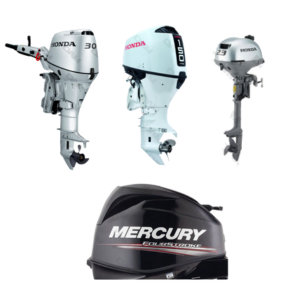

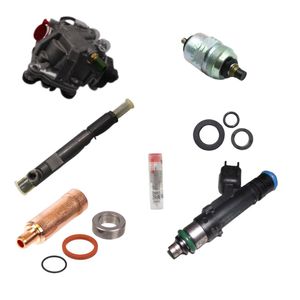
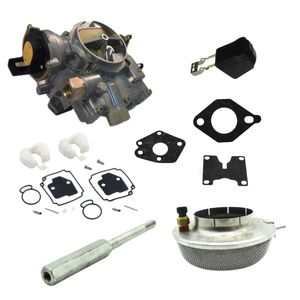




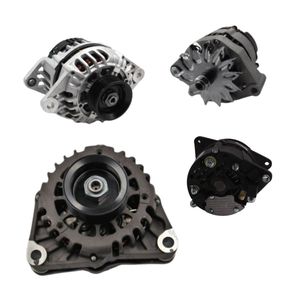
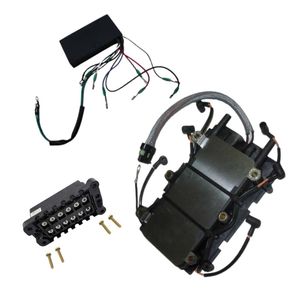
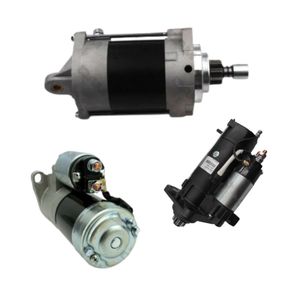
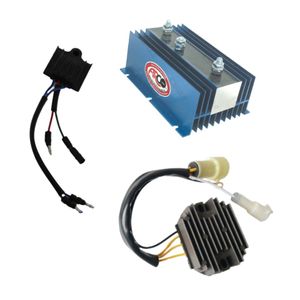
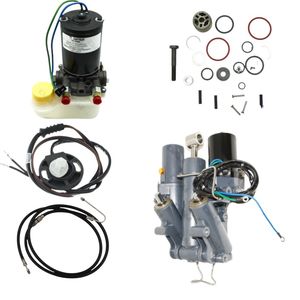
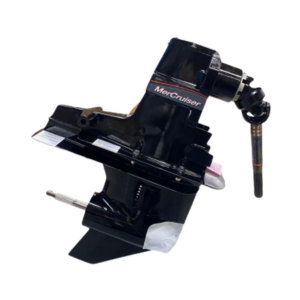
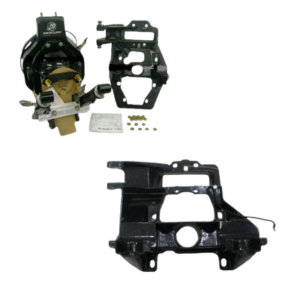
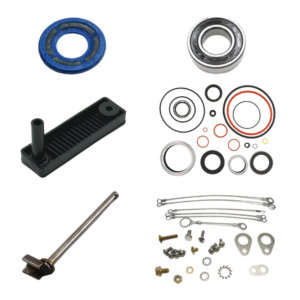

 Parts views
 Technical documents
 Ask for a quote
 Return request
Need to replace a light or complete your installation? Find port, starboard, stern, masthead and 360° lights to equip your boat properly.
View navigation lightsMandatory navigation lights are the light signals that allow other vessels to see you, identify your direction and understand your situation. They must be used from sunset to sunrise, and also in restricted visibility. Their configuration depends mainly on the type of boat, its length and its situation: underway, at anchor, under sail, under power or in a special case. A compliant light is visible, correctly positioned, properly powered and not hidden by onboard equipment.
- Are mandatory navigation lights really essential in 2026?
- What are navigation lights used for on a boat?
- When should navigation lights be switched on?
- How do you interpret navigation lights seen in the distance?
- Which navigation lights should you know?
- Which mandatory lights are required for your boat?
- What minimum visible range should navigation lights have?
- Which lights should be shown at anchor?
- Which lights should be recognised in special situations?
- Should you choose LED or conventional navigation lights?
- How do you choose and install navigation lights correctly?
- How can you check that your navigation lights are compliant?
- Which light signals complement navigation lights?
- What should you remember before setting off?
- FAQ on mandatory navigation lights
Are mandatory navigation lights really essential in 2026?
Yes, mandatory navigation lights are essential whenever you navigate at night or in restricted visibility. They are not only used to “be seen”: they also indicate your direction, your type of movement and sometimes a specific situation. The international collision-prevention rules at sea, commonly known as COLREG or IRPCS, define when lights must be used, their colours, visibility sectors and minimum ranges.
In practice, a poorly lit boat becomes difficult for other users to read. A missing, weak, badly aligned or hidden light can create a dangerous situation, especially in a channel, near a harbour, at anchor or in deteriorating weather. Checking the lights should therefore be part of preparing the boat, just like checking levels, VHF equipment and safety gear.
To put this regulatory topic into a wider context, you can also read our guide to rules for navigating at sea, which helps connect navigation lights with the main good practices on board.
What are navigation lights used for on a boat?
Navigation lights make your boat identifiable and understandable to other vessels. Each colour and each visibility sector gives information: red means port, green means starboard, and white may indicate the stern, the masthead, anchoring or an all-round light depending on the case.
This information helps other recreational boaters, fishermen or professional vessels understand whether they are crossing you, overtaking you, meeting you head-on, seeing you from the side, seeing you at anchor or observing a special manoeuvre. Navigation lights are therefore a real visual language. The clearer that language is, the faster and safer decisions become.
If terms such as port, starboard, stern, bow or mast are not yet fully clear, our article on the anatomy of a boat will help you visualise where each light logically belongs. For a wider view of how these references fit together, you can also read the guide on how a boat works.
When should navigation lights be switched on?
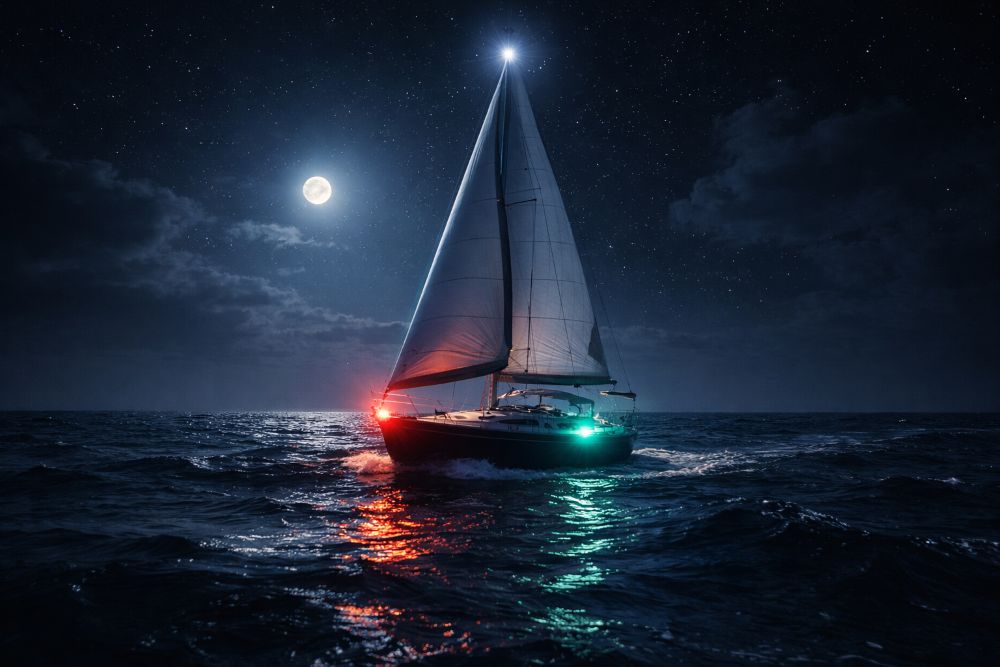
Navigation lights must be switched on from sunset to sunrise, and also during the day when visibility is restricted. This includes fog, mist, squalls, heavy rain or any situation in which a boat may become difficult to distinguish at a distance.
You should not think only in terms of “night navigation”. A trip in overcast weather or morning mist may require lights if visibility deteriorates. The right reflex is to switch them on before the situation becomes unclear, not when other users are already struggling to identify you.
The golden rule is simple: if other vessels may have difficulty seeing you or understanding your course, your lights must be operational. For more demanding conditions, especially in the cold season, our guide to winter navigation also highlights visibility, anticipation and equipment checks.
How do you interpret navigation lights seen in the distance?
Interpreting navigation lights means reading the colour, position and combination of lights observed. A red light means you are seeing the port side of the boat. A green light means the starboard side. Red and green together generally mean the vessel is approaching more or less head-on. A white stern light means you are in the vessel’s stern sector.
This reading is not theoretical: it helps assess whether a collision course is possible, whether you are overtaking a vessel or whether a boat is coming towards you. It must always be combined with visual and sound watchkeeping, a suitable speed and, where fitted, navigation instruments.
Electronics can help, but they never replace lights. AIS, multifunction displays and marine VHF radio strengthen safety, while lights remain the basic visual reference for all vessels, even the simplest ones.
Which navigation lights should you know?
The main navigation lights are sidelights, the stern light, the masthead light, the all-round light, bicolour or tricolour lights, and specific lights such as the towing light. Each has a colour, a visibility sector and a precise role.
What are port and starboard lights?
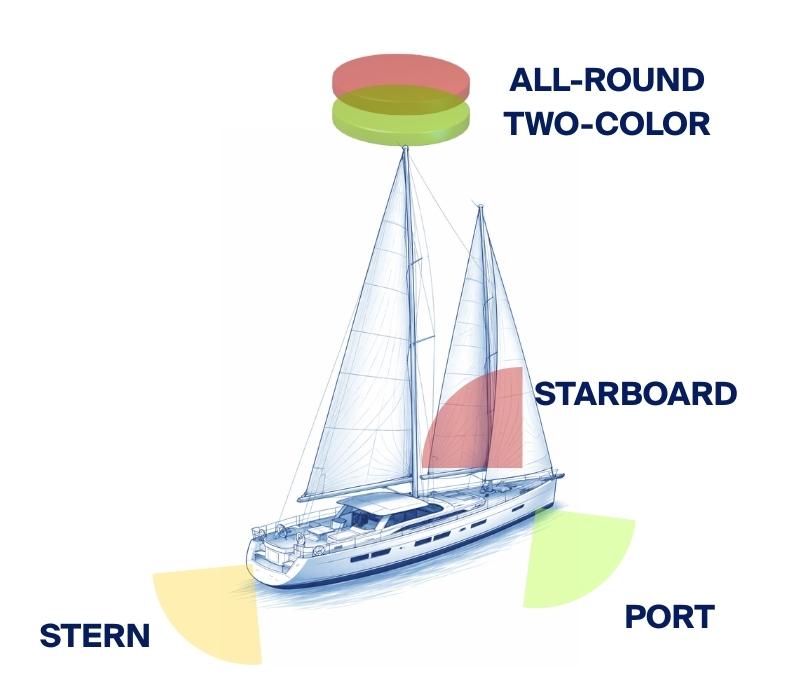
Sidelights indicate the boat’s orientation: red to port and green to starboard. Each is visible over 112.5° and helps show which side of the vessel is being seen.
What is a stern light?
The stern light is a white light placed at the back of the boat. It is visible over 135° and tells other vessels they are in your stern sector.
What is a masthead light?
The masthead light is a white light shining forward over 225°. It applies to mechanically propelled vessels and helps distinguish a power-driven boat from a sailing vessel under sail only.
What is a 360° all-round light?
An all-round light is visible over 360°. In recreational boating, a white all-round light is very often used as an anchor light, but it may also be used in certain simplified or specific configurations.
What is a bicolour or tricolour lantern?
A bicolour lantern combines red and green in one unit. A tricolour lantern combines red, green and white, especially on some sailing vessels under 20 m when sailing.
What is a yellow towing light?
The towing light is a yellow light shown in the stern sector. It signals towing operations and tells other vessels that a particular manoeuvring area must be respected.
Which mandatory lights are required for your boat?
The required light configuration mainly depends on the length of the boat and its type of propulsion. A powerboat, a sailing boat under sail, a sailing boat under engine, a small tender or a boat at anchor do not show exactly the same lights. To better understand powered setups, the guide on inboard or outboard engines can complete the reading.
Which lights for a motor boat under 7 m?
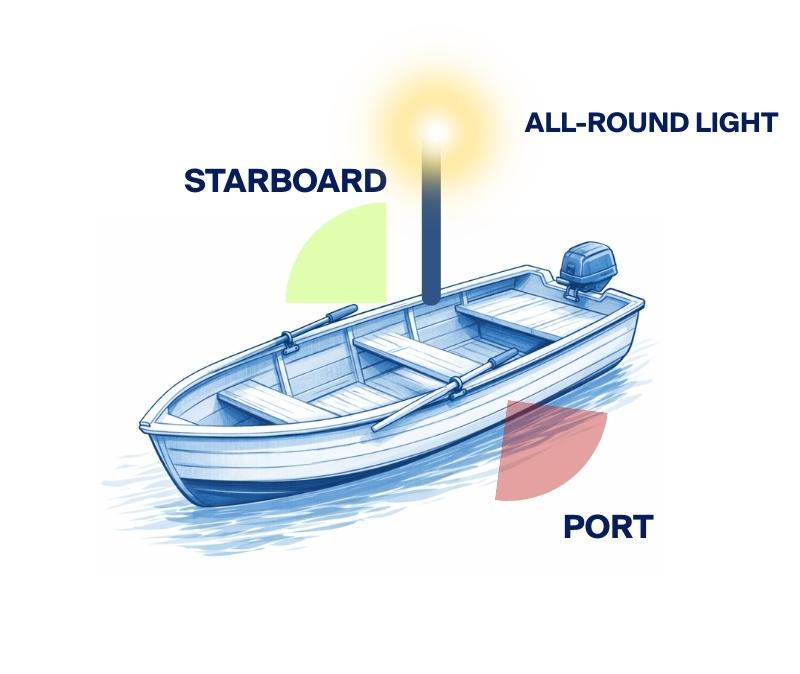
A motor boat under 7 m with a maximum speed not exceeding 7 knots can generally show an all-round white light, with sidelights if practicable. If a fixed installation is impossible, a white light ready to be shown in good time remains the minimum safety solution.
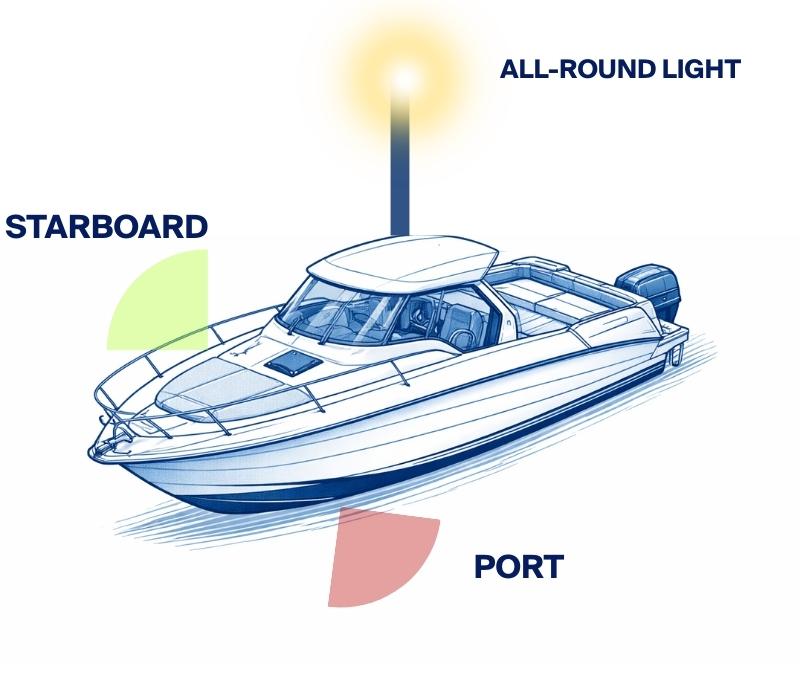
Which lights for a motor boat under 12 m?
A motor boat under 12 m may show an all-round white light together with red and green sidelights. The sidelights may be separate or combined in a bicolour lantern, provided their sectors remain clear.
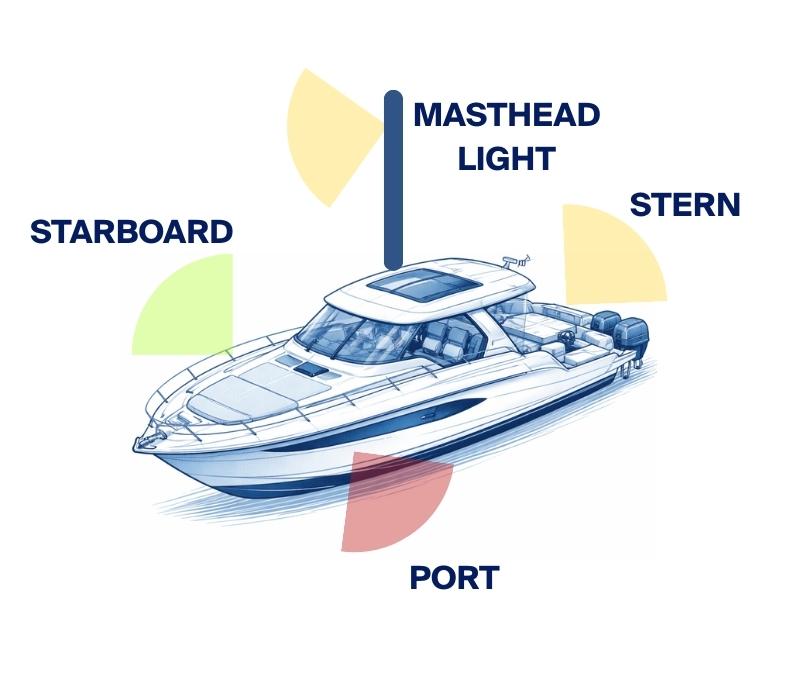
Which lights for a motor boat 12 m and over?
From 12 m upwards, the display must clearly distinguish the bow and stern: white masthead light, red and green sidelights and a white stern light. Range and placement become essential points.
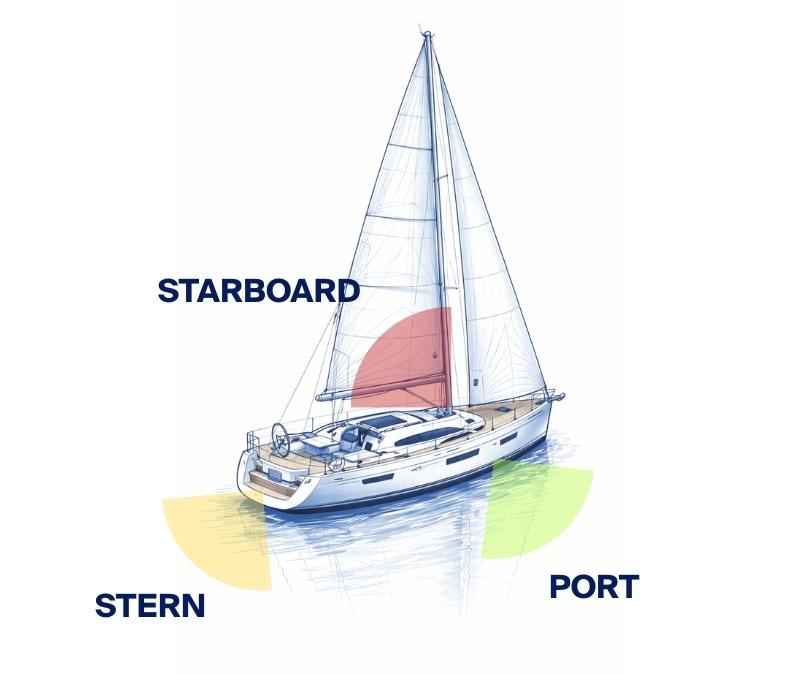
Which lights for a sailing vessel up to 20 m?
A sailing vessel underway under sail must show sidelights and a stern light. On sailing vessels under 20 m, a tricolour lantern at the masthead may also be used under the conditions provided for.
Which lights for a sailing vessel using its engine?
A sailing vessel navigating under engine is considered a mechanically propelled vessel for its lights. It should therefore not be read as a sailing vessel under sail only.
Which lights for a very small sailing vessel or rowing boat?
When the design does not allow standard regulatory lights to be displayed, a white light visible in good time must signal the boat’s presence and help prevent collision.
Visual navigation-light configurations
.jpg)
.jpg)
.jpg)
.jpg)
.jpg)
Not sure whether to choose a 360° light, bicolour lantern or separate lights? Start with your boat type, its length and your real use: night navigation, anchoring, tender use or sailing.
Compare lightsWhat minimum visible range should navigation lights have?
The minimum range of a navigation light is the distance at which it must be visible, expressed in nautical miles. This range varies according to the vessel’s length and the type of light. It should be checked when replacing an old light, fitting an LED model or equipping a tender.
A new light is not automatically suitable for every boat. Check the product’s intended use, stated range, colour, watertightness, power supply and mounting type. A weak, badly powered or hidden light may become unreadable even if it switches on correctly at the dock.
| Vessel length | Lights concerned | Minimum range to remember |
|---|---|---|
| Under 12 m | Masthead, sidelights, stern, towing, all-round | Masthead: 2 NM · Sidelights: 1 NM · Stern: 2 NM · All-round: 2 NM |
| 12 m to under 50 m | Masthead, sidelights, stern, towing, all-round | Masthead: 5 NM, or 3 NM if vessel is under 20 m · Sidelights: 2 NM · Stern: 2 NM |
| 50 m and over | Masthead, sidelights, stern, towing, all-round | Masthead: 6 NM · Sidelights: 3 NM · Stern: 3 NM · All-round: 3 NM |
Which lights should be shown at anchor?
At anchor, the main reference is the all-round white light, often called the anchor light. It lets other vessels understand that your boat is stationary and occupying an area to be avoided.
Do not confuse navigation lights underway with anchor lights. A boat at anchor that keeps its running lights on may send an ambiguous message. Conversely, a boat underway showing only an anchor light does not give enough information about its orientation.
Anchoring also requires method: choosing the area, chain length, monitoring and anticipating swinging. To complete this point, our guide to anchoring techniques can help you secure the stop beyond the 360° light alone.
Which lights should be recognised in special situations?
Special situations use combinations of lights designed to signal an activity or restricted manoeuvrability. In recreational boating, the main aim is to recognise them so you can alter course, reduce speed and keep a safe margin.
Which lights for a fishing vessel?
A fishing vessel may display specific lights indicating that its activity limits its ability to manoeuvre. Avoid crossing its path and keep clear of fishing gear.
Which lights for towing or pushing?
Towing and pushing change the vessel’s outline and behaviour. The safe approach is never to pass between a tug and its tow, even if the cable is not visible.
Which lights for a vessel not under command?
A vessel not under command signals that it cannot respond normally. Give it plenty of room and do not rely on it making a rapid avoiding manoeuvre.
What should you do if you see an unknown light combination?
If you do not understand a combination of lights, slow down, increase your watch and avoid any risky course. When in doubt, do not try to “slip through quickly”. Keep your distance, check your heading and use your communication equipment if the situation requires it.
Should you choose LED or conventional navigation lights?
LED navigation lights are now very common, but the main criterion remains compliance: colour, sector, range, watertightness and mounting. An LED consumes little power, produces little heat and often offers a long service life, provided the product is suitable for marine use. To look at all electrical consumers on board more broadly, you can also read the guide on how to manage energy on board.
Conventional bulb lights may still work on older installations, but they need more monitoring: tired bulb, oxidised contact, higher consumption, heating or dulled lens. During a refit, LED is often attractive, but it must be fitted cleanly and powered correctly.
A new LED light may appear weak if the wiring is oxidised, if the cable section is insufficient or if voltage drops between the battery and the light. To understand this better, our guide to electricity on board helps connect light failures with the basics of the electrical circuit.
How do you choose and install navigation lights correctly?
To choose and install navigation lights, start from the regulatory configuration of the boat, then check real visibility once the light is fitted. A light that looks right on paper can become ineffective if it is mounted too low, hidden by a canopy or aligned on the wrong axis. The power supply should also be consistent with the boat battery, especially when several electrical devices run at the same time.
Which mounting type should you choose?
Lights may be screw-mounted, recessed, bracket-mounted, masthead-mounted or standalone depending on need. The right mounting depends on available space, wiring, impact protection and visibility.
Which mounting mistakes should you avoid?
Common mistakes include hidden lights, wrong orientation, no suitable fuse, non-watertight connections and cables exposed to corrosion. These details explain many failures.
How should you test your lights before departure?
Test every position: port, starboard, stern, masthead, 360° and anchor. Also check intensity, intermittent contacts and visibility from different angles.
Maintenance must be regular, especially if the boat is exposed to humidity or salt. During boat winterisation, use the general check to inspect connectors, switches, cable runs and light supports.
How can you check that your navigation lights are compliant?
A navigation light can be checked against five simple criteria: colour, sector, range, position and readability. The light must emit the right colour, in the right angle, over the right distance, from the right place, without being confused with decorative lighting or a searchlight.
- Colour: red, green, white or yellow according to the light’s role, with no ambiguous tint.
- Sector: 112.5° for sidelights, 135° for the stern, 225° for the masthead, 360° for an all-round light.
- Position: visible, aligned light, not hidden by the pulpit, bimini, engine, tender or rigging.
- Range: range compatible with the boat’s length.
- Readability: no stray lighting that could disturb interpretation of the lights.
This check should preferably be carried out in conditions close to real use: at dusk, with equipment installed, and not only at the dock in daylight. For a wider approach, our guide to navigation instruments usefully complements visibility and situational awareness.
Which light signals complement navigation lights?
Safety lighting devices complement navigation lights, but they do not replace them. A waterproof torch, a lifejacket strobe, a self-righting light or a handheld searchlight can help signal a person overboard, a tender, a breakdown or a specific manoeuvre.
The key point is not to create confusion. A searchlight left on continuously can dazzle. Decorative LEDs visible from far away can blur the reading of regulatory lights. Complementary lights should therefore remain suited to their purpose: locating, signalling and securing, but not replacing the standardised language of navigation lights.
To place these items within the full onboard safety equipment, you can read our article on mandatory boat safety equipment.
What should you remember before setting off?
The key point is that navigation lights must match your real situation: underway, under power, under sail, at anchor or in a special case. Good equipment is visible, compliant, well positioned and tested regularly.
| Your case | Lights to provide | Point to watch |
|---|---|---|
| Power-driven boat < 7 m and ≤ 7 knots | All-round white light, sidelights if possible | Remain visible and understandable despite a simple installation |
| Power-driven boat < 12 m | All-round white light + separate red/green lights or bicolour lantern | Do not confuse running light and anchor light |
| Power-driven boat ≥ 12 m | Masthead + sidelights + stern light | Clearly distinguish bow, sides and stern |
| Sailing vessel under sail < 20 m | Sidelights + stern, or tricolour lantern depending on configuration | Under engine, the sailing vessel follows power-driven vessel rules |
| At anchor | All-round white light | Clearly signal that the boat is stationary |
| Restricted visibility | Lights suited to the situation, even by day | Switch on before others struggle to identify you |
FAQ on mandatory navigation lights
This FAQ answers practical questions that often arise when installing, testing or replacing navigation lights. It complements the main configurations without repeating the cases already covered above.
Can a searchlight replace navigation lights?
No. A searchlight is used temporarily to illuminate an area, a manoeuvre or an obstacle. It does not replace regulatory lights because it does not clearly indicate your direction or status.
Why can a new light seem too weak?
The cause is often the power supply: voltage drop, cable too thin, oxidised terminal, faulty ground or non-watertight connection. Check the light, but also the circuit feeding it.
Are battery-powered lights enough for a tender?
They may suit some simple or backup uses, provided they are visible, stable, correctly oriented and truly suitable for the marine environment. For regular use, a fixed installation remains more reliable.
Can decorative lighting remain visible while underway?
It is not recommended if it can be confused with regulatory lights or reduce their readability. Underway, the aim is for others to immediately understand your orientation.
What should you do if a light fails during a trip?
Reduce speed, increase watchkeeping, make your boat as readable as possible and use a waterproof torch as a temporary solution without dazzling others. Return or repair as soon as the situation allows.
When should navigation lights be checked?
Check them before any late trip, after a long period without use, after winterisation or during boat de-winterising, and as soon as a false contact appears. A quick test often prevents a failure at the worst moment.