


 Catalog
 Exploded views

















 Honda Marine










 Parts views
 Technical documents
 Ask for a quote
 Return request
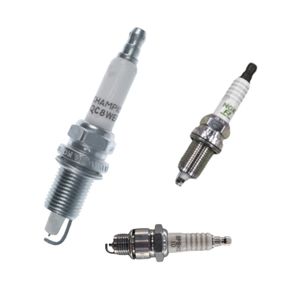
Not sure about the condition of your spark plugs? Check their reference, colour and wear before the season or as soon as the engine becomes hard to start.
View spark plugsBoat spark plugs should be checked at least during annual maintenance and replaced according to the engine maker's recommendation, engine hours and visual condition. Hard starting, misfiring, unstable idle, power loss or higher fuel consumption can indicate a worn spark plug. Always respect the correct reference, heat range and electrode gap for the engine. When replacing them, it is usually best to change the full set together.
How often should boat engine spark plugs be changed?
The right spark plug replacement interval depends first on the engine manual. Depending on the engine, spark plug technology and boat use, replacement may be recommended during annual maintenance, after a certain number of engine hours or only when the plug condition requires it. The safest rule is to follow the manufacturer's recommendation, then adapt inspection to your real use.
On a boat that is used only occasionally, a spark plug may look clean but have aged, suffered humidity or been weakened by repeated starts. On an engine used for long periods at idle, fishing or manoeuvring, fouling can appear faster. This is why spark plug inspection naturally belongs in annual boat engine maintenance.
In practice: check the spark plugs at least once per season, before a long trip, after winter storage or as soon as engine symptoms appear. Replace them if they are worn, fouled, cracked, wet or if the manufacturer requires it.
What do spark plugs do on a boat engine?
Spark plugs create the spark that ignites the air-fuel mixture in petrol engines. Without a clean spark, combustion becomes irregular: the engine starts less easily, runs poorly, loses efficiency or stalls. Spark plugs are therefore not just small consumables, but essential parts of the boat ignition system.
A spark plug also says a lot about engine condition. Its colour, deposits and moisture can point to a rich mixture, oil issue, wrong reference, carburation problem, doubtful fuel supply or a wider ignition fault.
What are the signs of a worn boat spark plug?
A worn spark plug often causes progressive symptoms. The engine may become harder to start, idle unevenly, misfire under acceleration or consume more fuel. If several plugs are worn or fouled, the engine can lose power and become less pleasant to use.
Does the engine start badly?
A weak spark can make starting harder, especially when cold or after a long period of inactivity. If the engine refuses to start, also read our guide to a boat engine that will not start.
Is the idle unstable?
A fouled spark plug can disturb combustion at low rpm. This symptom can also come from the carburettor, injection or air intake, so it is useful to diagnose a boat engine that will not idle.
Does the engine misfire?
Misfiring under acceleration or hesitation at rpm can indicate an irregular spark. Spark plugs should then be checked before replacing more expensive parts.
A spark plug is not the only possible cause. A stalling boat engine or boat engine power loss can also come from fuel, filters, supply, compression or another ignition component.
How can you tell if a spark plug needs replacing?
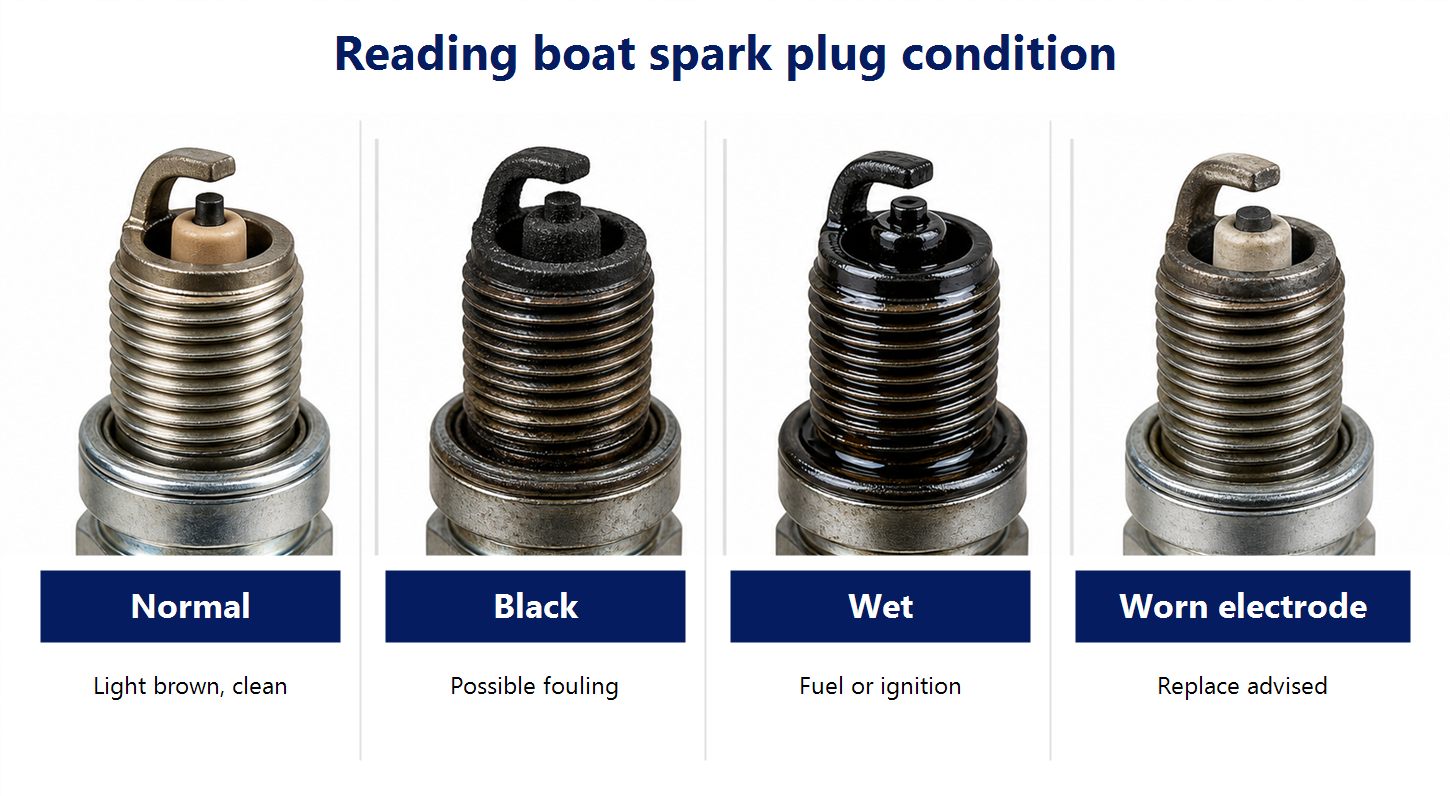
Inspection begins with a visual check. A healthy spark plug usually has a clean electrode, an insulator without cracks and a consistent colour. Light brown or light grey can correspond to normal combustion depending on the engine and fuel. A black, oily, wet, white, cracked or worn-electrode spark plug should be treated as a warning sign.
Black or fouled spark plug?
It may indicate a rich mixture, long idle periods, a dirty air filter, a wrong reference or incomplete combustion.
Wet spark plug?
It may indicate a flooded cylinder, no spark, an ignition problem or excess fuel.
Worn electrodes?
If the gap increases, the spark becomes less effective. The spark plug should be replaced according to the tolerances specified by the manufacturer.
Do not rely only on appearance if the engine shows symptoms. A plug may look acceptable and still produce an insufficient spark under real conditions. If in doubt, replace the full set with suitable spark plugs for boat engines.
Which spark plug should you choose for your boat engine?
You must choose a spark plug that is strictly compatible with your engine. The manufacturer reference, heat range, thread, reach, electrode gap and plug technology must be respected. Two plugs that look similar may have different characteristics and cause poor operation if they are not suitable.
The reference is often printed on the fitted plug, but the service manual remains the priority source. Depending on the engine, you may find standard, platinum or iridium spark plugs. Iridium or platinum plugs may last longer on some engines, but they should not be installed unless they are recommended or equivalent to the specified reference.
Choose the right reference Find spark plugs and ignition parts suited to marine engines at DAM Marine.
View boat spark plugsCan you change boat spark plugs yourself?
Yes, replacing spark plugs is accessible on many engines if you work cleanly, with the engine stopped, using the correct socket and the correct plug reference. Disconnect the plug caps carefully, replace the plugs one by one so the leads are not mixed up, then refit without forcing.
If access is difficult, if the thread resists, if a plug is broken or if the fault persists, seek professional advice. Excessive tightening or cross-threading can damage the cylinder head. For routine work, use suitable marine engine tools.
Good practice: replace plugs one by one, keep the ignition lead order and change the full set together to keep wear consistent between cylinders.
What mistakes should be avoided when changing boat spark plugs?
The first mistake is fitting an approximate reference. A spark plug that is too hot, too cold, too long or incorrectly gapped can disturb combustion and damage the engine. The second mistake is overtightening: a plug must be screwed in cleanly, straight, then tightened according to the manufacturer's recommendation.
Cleaning the plug aggressively?
Avoid using a wire brush on the electrode or insulator. If the plug is worn, fouled or doubtful, replacement is usually safer.
Changing only one plug?
It can be done as a temporary fix, but for maintenance it is better to replace the full set to avoid different wear levels.
Ignoring the lead set?
If a new plug does not solve misfiring, check the boat ignition wires, plug caps and boat ignition coil.
Should spark plugs be checked after boat winterizing?
Yes, recommissioning is a good time to check spark plugs, especially if the engine has been stored for several months. Humidity, short starts, aged fuel or imperfect combustion can make restarting difficult. A pre-season check helps avoid a simple failure at the dock or on the first trip.
If you are preparing your boat for winter or recommissioning, combine this check with the basics: fuel, oil, filters, battery, cooling and boat winterization. Winterizing products for marine engines can also help protect the engine during storage.
What checks should you remember before going back to sea?
Before boating, the engine should start cleanly, idle steadily, rev without misfiring and show no unusual fuel consumption. Spark plugs should be checked first if any of these signs appear, but the diagnosis should remain wider if the problem persists.
| Observed situation | Recommended check | Possible action |
|---|---|---|
| Hard starting | Spark plugs, plug caps, battery, fuel | Replace the plugs if spark or visual condition is doubtful |
| Unstable idle | Fouled plugs, carburettor, injection, air intake | Check the plug set and continue diagnosis if needed |
| Misfiring under acceleration | Spark plugs, wires, coil, fuel supply | Replace the plug set if worn or unsuitable |
| Black or wet spark plug | Rich mixture, flooding, ignition fault | Identify the cause before fitting a new plug |
| Annual maintenance | Reference, gap, colour, electrode, thread | Replace according to the engine manual or observed condition |
FAQ about changing boat spark plugs
Should boat spark plugs be changed every year?
Not always, as the interval depends on the engine, hours and plug type. However, an annual check is recommended. If the plugs are worn, fouled or if the manufacturer specifies replacement, they should be changed.
Should all spark plugs be replaced at the same time?
Yes, this is preferable during maintenance. Plugs with different wear levels can make cylinders run less evenly. As a temporary fix, one plug can be replaced, but the full set should then be checked.
Can you clean a spark plug instead of replacing it?
Light cleaning can help read the plug condition, but it does not replace a worn, cracked or deeply fouled plug. Avoid aggressive cleaning, especially on electrodes and technical plugs such as iridium.
Can a worn spark plug increase fuel consumption?
Yes. A weak or irregular spark can worsen combustion, cause misfiring and increase consumption. Fuel, filters, intake and other ignition components should also be checked.
Do diesel engines have spark plugs?
No, a diesel engine does not use spark plugs to ignite fuel. Some diesel engines have glow plugs to help cold starting. These are different parts and should not be confused.