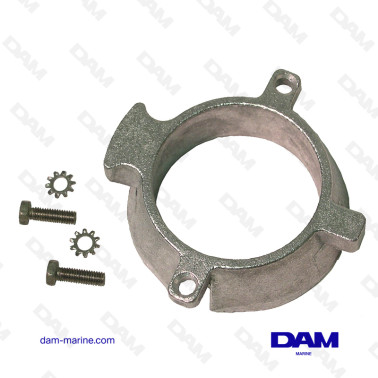
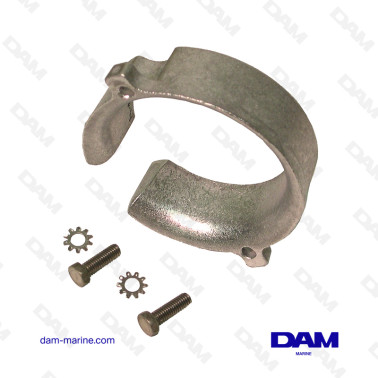
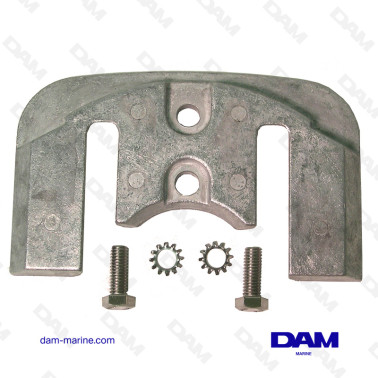
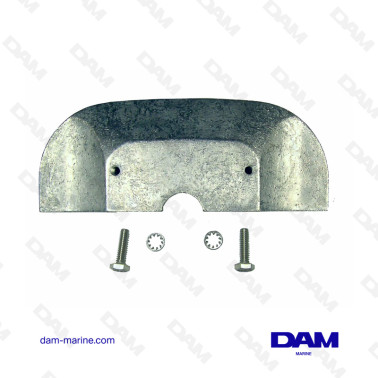
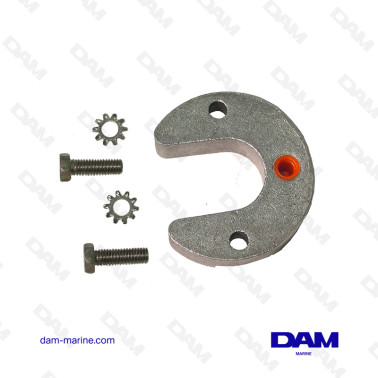
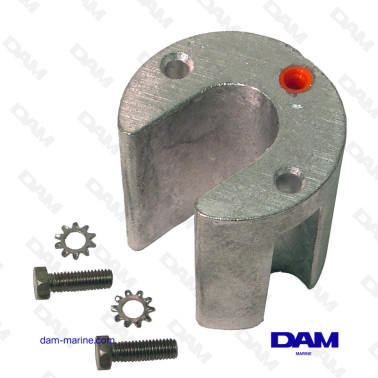
Zinc, aluminium or magnesium: which metal should you choose for your Mercruiser?
Choosing the right material for your anodes is a decisive step in ensuring the longevity of your marine engine. This choice is not random: it depends exclusively on the type of water in which your boat operates. Choosing the wrong alloy can make the anode completely ineffective, exposing your sterndrive to rapid destruction by electrolysis.
The zinc anode is the standard, historic option for boaters who navigate exclusively in marine environments. If your boat remains moored year-round in a saltwater harbour, zinc offers excellent electrochemical reactivity to capture corrosion before it attacks vital propulsion components.
The aluminium anode is now the universal solution par excellence. This modern alloy performs extremely well in salt, brackish or fresh water. Choosing aluminium is particularly recommended if you often change bodies of water, while benefiting from a service life that is generally longer than that of traditional alloys.
Finally, magnesium anodes are strictly reserved for fresh-water environments (lakes, rivers and waterways). In these low-conductivity waters, it is the only metal active enough to perform its sacrificial role. Be careful: using magnesium at sea would cause it to disintegrate in just a few days.
| Metal | Recommended navigation environment | Main use |
|---|
| Zinc anode |
Saltwater |
Exclusive sea navigation. |
| Aluminium anode |
Saltwater, freshwater and brackish water |
Versatile use and excellent service life. |
| Magnesium anode |
Freshwater, lakes and rivers |
Strict inland waterway navigation. |
How can you tell if an anode is worn out, and when should it be changed?
The wear of a plate anode or any other sacrificial element is a normal process that proves the system is working. However, it is vital for the health of your Mercruiser sterndrive to monitor this degradation carefully. Delaying the replacement of your protective parts can lead to repairs whose price is excessive compared with the cost of basic maintenance.
The absolute rule in boating is to replace the equipment immediately when it shows a 50% loss of material compared with its original volume. Even if the part still appears complete, its ability to capture galvanic currents drops sharply beyond this critical threshold.
A regular visual inspection should therefore be an integral part of your checking routine. It is recommended to inspect each Mercury anode before every launch or extended trip, looking for signs of excessive deterioration or pronounced oxidation (white powder or a heavily eaten surface).
Systematic replacement should be carried out at least once a year, ideally during winterisation or the annual service of your engine. If your boat stays permanently afloat, changing twice a year may be necessary depending on how aggressive the water is.
Expert advice: never apply paint, grease or antifouling treatment to your anodes. These products create an insulating barrier that prevents the alloy from dissolving, making the protection completely ineffective.
Going further: maintenance kits and compatible Mercruiser parts
To guarantee calm and comprehensive maintenance, DAM Marine has developed solutions that group together all the essential components for your propulsion. Choosing a complete package is often more economical than buying parts individually, offering excellent value for money.
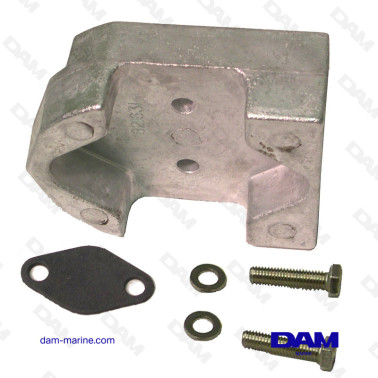
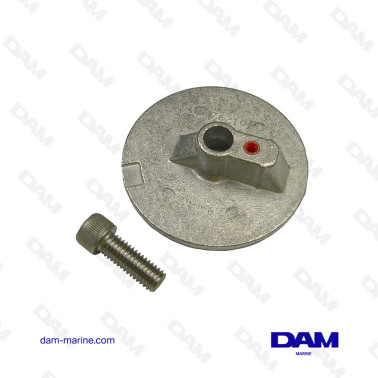
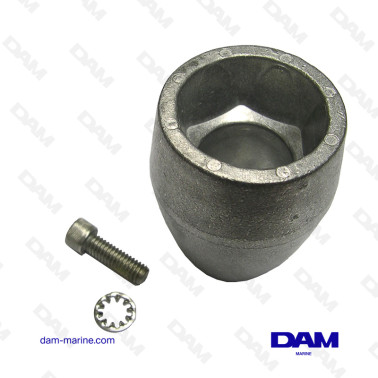
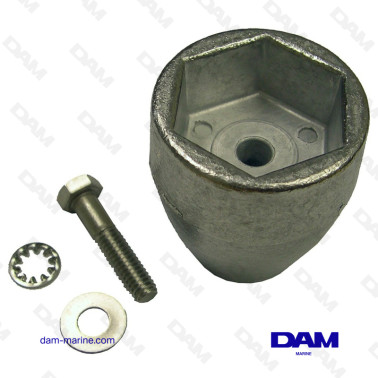
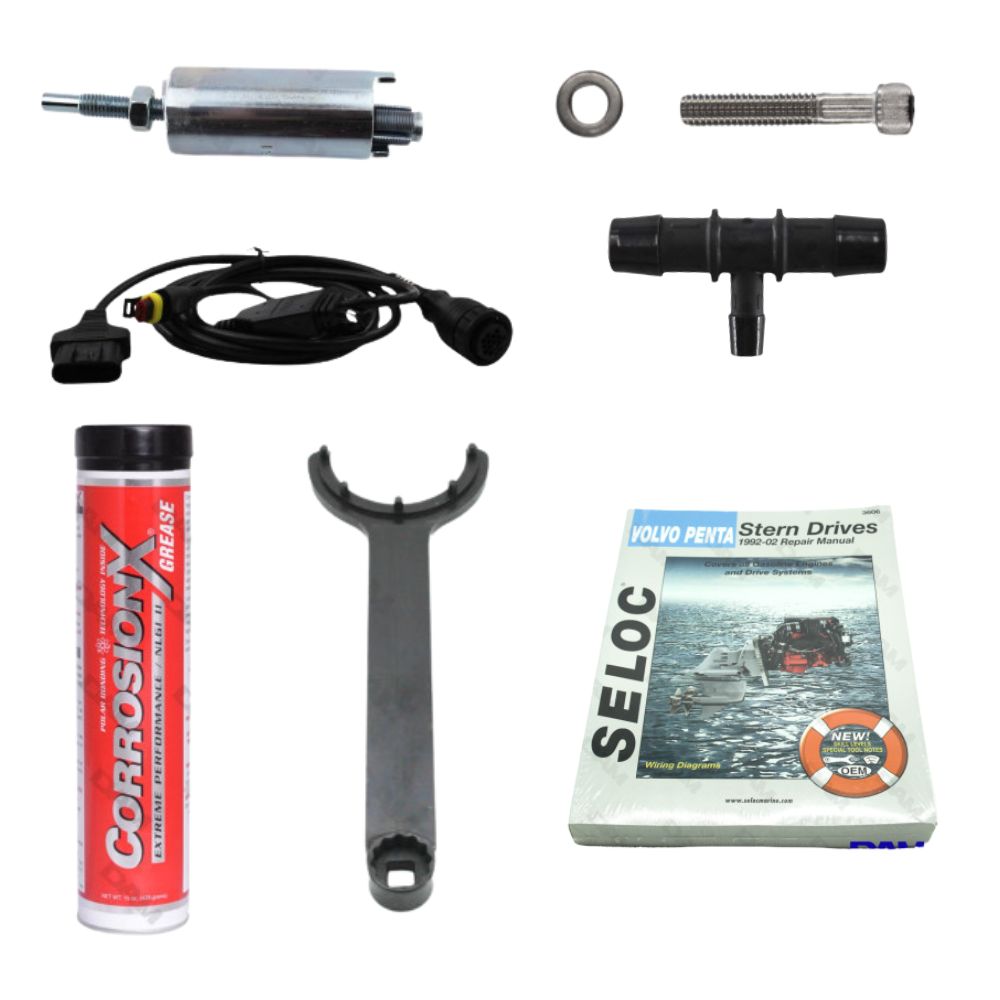
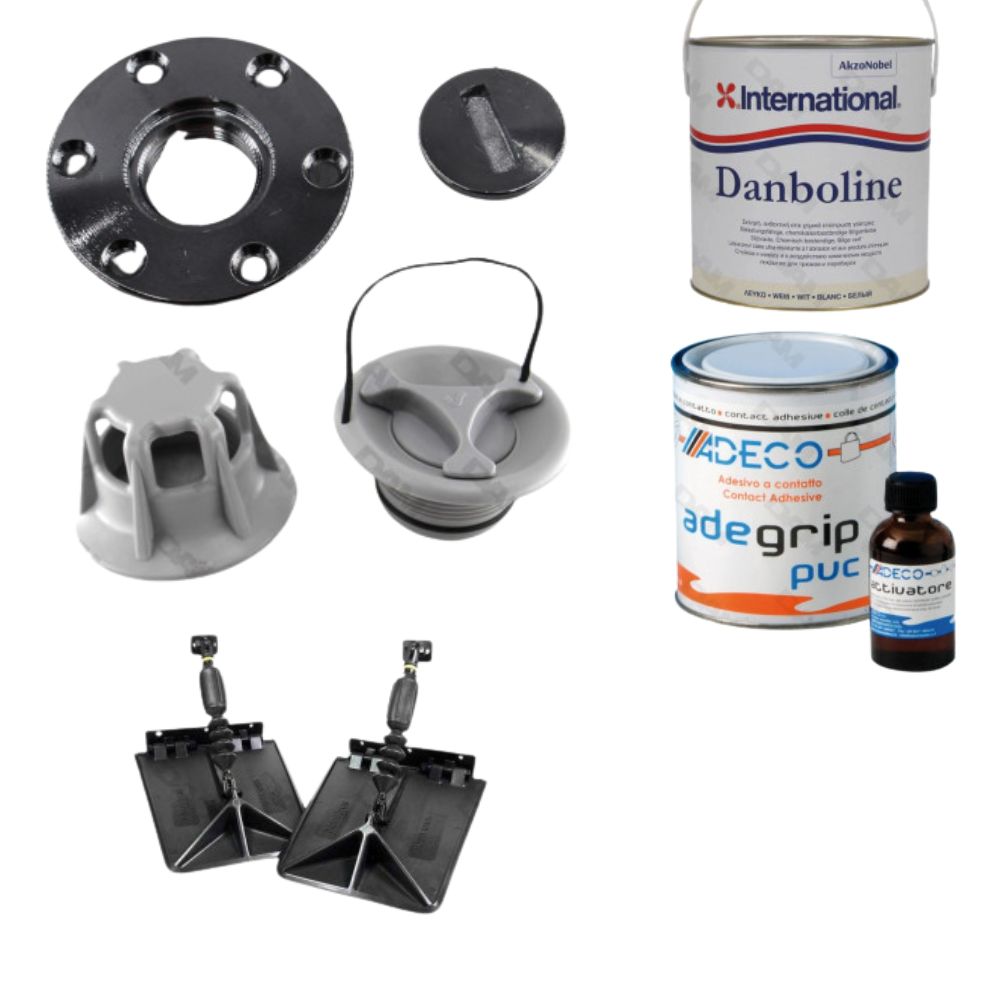
- We recommend purchasing a complete anode kit for perfect renewal of your protection. Each anode kit generally includes trim tab elements, the cavitation plate, ram protections and all required fasteners for immediate installation.
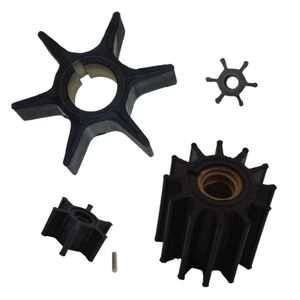
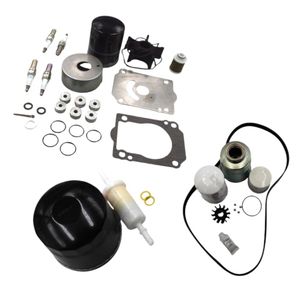
- Explore our other sections to discover the complete maintenance ecosystem: visit our Mercruiser maintenance kits section to find cooling impellers or bellows, and browse our propeller range to maximise your navigation performance.
Checking compatibility with your Mercruiser sterndrive
Making sure the selected Mercruiser anode perfectly matches your mechanics is essential. Fastening systems vary considerably from one decade to another. To help you validate part compatibility, here are the key years to consider when ordering.
- To identify the generation of your Alpha One transmission: generation I broadly covers models manufactured between 1984 and 1990. Generation II, on the other hand, covers all models produced from 1991 to today and requires a specific mounting kit.
- For owners of Bravo range equipment, and especially Bravo III sterndrives, close attention must be paid to the year of manufacture. A major technical distinction exists for models machined from 2004 onward, as the location and shape of the cathodic protection were modified by the manufacturer.
Pre-purchase checklist
- year of manufacture of the engine;
- exact transmission model (Alpha or Bravo);
- serial number check (often engraved on the housing);
- comparison with the original reference shown on our product sheet.



 Catalog
 Exploded views















 Honda Marine








 Parts views
 Technical documents
 Ask for a quote
 Return request