


 Catalog
 Exploded views

















 Honda Marine






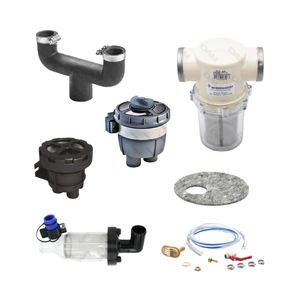
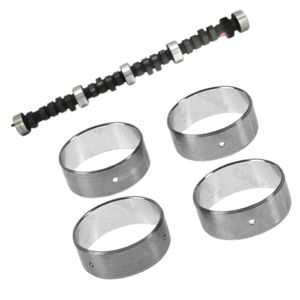
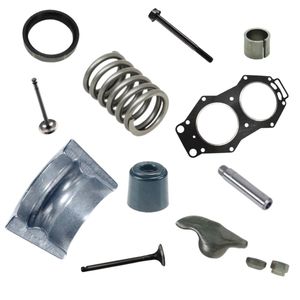
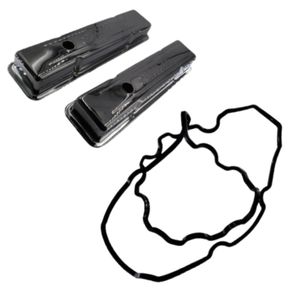



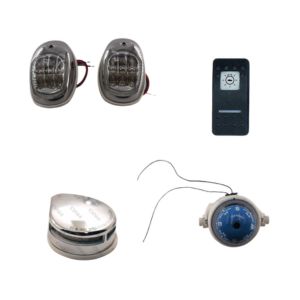
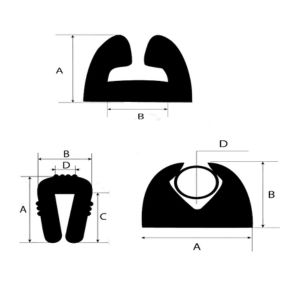
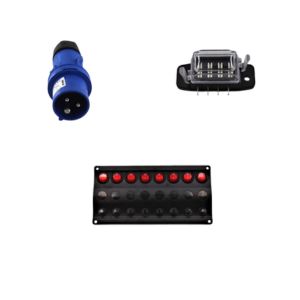
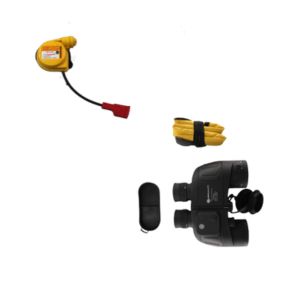
 Parts views
 Technical documents
 Ask for a quote
 Return request
Boat propeller maintenance: cleaning, protecting and checking your propeller
DAM Marine helps you choose anodes, marine grease and propeller protection according to your setup.
Boat propeller maintenance means cleaning the blades, removing deposits, checking the anodes and protecting the surface if fouling returns quickly. A clean propeller improves thrust, helps reduce fuel consumption and limits vibration. A dedicated propeller antifouling can be useful on a boat that often remains moored in port. A professional inspection becomes necessary after an impact, a bent blade, cavitation or persistent vibration.
How can you maintain a boat propeller without damaging it?
To maintain a boat propeller, always start by removing visible dirt before sanding or applying any protection. A fouled propeller has an uneven surface: water flows less smoothly, the boat moves less easily and the engine may feel more strained. To place this check in a broader context, you can also read the guide on how a boat works.
The right method is to work progressively. First remove algae, shells and deposits, then clean the blades more carefully before checking the edges, hub and areas around the shaft. This approach prevents excessive scraping and helps you quickly identify an impact, a crack or a slightly bent blade.
Why start with heavy cleaning?
Heavy cleaning removes the bulk of the fouling without attacking the metal. It also gives you a clearer view of the real condition of the blades before using a brush or abrasive pad.
Why finish with a visual check?
A clean propeller reveals defects: a bent edge, impact marks, corrosion, a worn anode or a deposit stuck near the hub.
Why avoid overly aggressive methods?
A deeply scratched or over-sanded blade can lose its regular profile. A propeller remains a precise propulsion component.
What should you use to clean a boat propeller effectively?
Cleaning a propeller mainly requires simple tools: a blunt scraper, a brush, a light abrasive pad and clean water for rinsing. The aim is not to strip it aggressively, but to restore a clean surface without digging into the metal.
A wire brush may be used on resistant deposits, but with care. On an aluminium propeller, be especially careful with harsh products or poorly controlled acids. When in doubt, start with the gentlest tool and only increase the action if the deposits resist.
How do you remove barnacles and stubborn deposits from the propeller?
Barnacles should be loosened, not torn off violently. Use a scraper or a non-sharp tool to lift the deposit, then finish with a brush or light abrasive. This method limits deep marks on the blades.
If the crust is thick, it is better to make several passes rather than forcing everything off at once. After cleaning, rinse and wipe the surface: a clean propeller lets you check whether the fouling was hiding a crack, localised corrosion or a damaged blade.
Should you sand a boat propeller?
Yes, sanding a boat propeller can be useful if the surface has become rough, if deposits have left marks or if you are preparing to apply a suitable protection. Sanding must remain light: it is meant to even out the surface, not alter the blade shape.
Abrasive paper around 120 grit can be used as a reference for reasonable surface preparation, but you should not aim for a mirror finish at all costs. If a blade is bent, heavily marked or unbalanced, sanding is not enough: a professional inspection is safer.
How should maintenance be adapted to the propeller material?
Maintenance depends on the material: bronze, aluminium and stainless steel do not react in exactly the same way to friction, cleaning products and corrosion. The right reflex is therefore to choose a gentle method first, then adapt it depending on the propeller’s resistance.
How do you clean a bronze propeller?
Bronze generally withstands mechanical cleaning well. Use a scraper, brush and light abrasive pad, without applying an unidentified aggressive product.
How do you clean an aluminium propeller?
Aluminium requires more care. Avoid overly strong products and proceed gradually so you do not attack the surface.
How do you clean a stainless steel propeller?
Stainless steel is strong, but it can still be marked. Check the blade edges after grounding or contact with an object.
How can you stop a boat propeller from fouling too quickly?
To limit fouling, combine regular use, visual checks and suitable protection if the boat often stays still. A stationary propeller in loaded water quickly becomes covered with algae, shells and deposits.
A clean, even surface catches less dirt. Also check the overall condition of the propulsion system, because a dirty propeller can make the engine feel less efficient. To understand the role of the propeller within the complete propulsion system, see the guide how a boat propeller works.
Which antifouling should you choose for a boat propeller?
Propeller antifouling is useful when fouling returns quickly, especially on boats left moored for long periods. You should not apply just any paint: a propeller rotates, is exposed to stress and requires protection compatible with exposed parts.
The choice depends on the water, navigation frequency and surface. To understand the selection logic, the guide how to choose the right antifouling for your boat covers the essentials. For a propeller or sterndrive, a dedicated solution such as Velox propeller/sterndrive antifouling may be suitable.
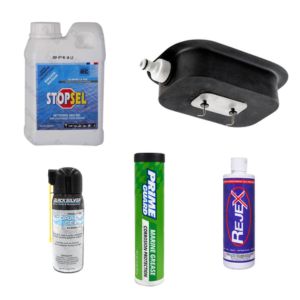
Antifouling, anodes and marine grease: check the useful products before putting the boat back in the water.
When should the anodes around the propeller be replaced?
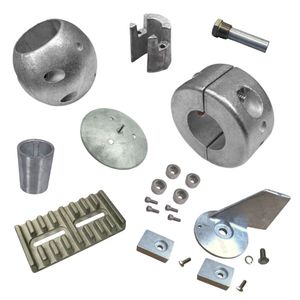
Anodes should be replaced when they are heavily consumed, cracked, loose or too irregular to protect the metal parts properly. Their role is to corrode instead of the important components of the propulsion line.
The service life of an anode varies according to the water, marina, electrical connections, metals on board and boat use. The most reliable approach is therefore a regular visual check, especially during haul-out, winterisation and de-winterising a boat. To better understand the available shapes and materials, read the guide to the different types of boat anodes.
When should anodes be checked?
Check them every time the boat comes out of the water, before a long lay-up and whenever you notice unusual corrosion.
Where can you find the right anode?
The model depends on the brand, the protected part and the type of water. You can browse DAM Marine boat anodes.
How do you maintain the propeller shaft and nearby parts?
On a shaft line, maintenance is not limited to the blades. The propeller shaft, cutless bearing, fitting areas and fastening parts must remain clean and inspected. A deposit or poorly located corrosion can make removal difficult and encourage wear. This point is directly part of the boat propulsion system.
When the propeller is removed, apply marine grease only to the intended areas to make assembly easier and reduce seizing. DAM Marine offers a marine grease for propeller shafts. In the event of play, noise or vibration, the propeller shaft cutless bearing is one of the parts to check.
How can you recognise cavitation, loss of thrust or vibration?
Cavitation is often recognised by an increase in engine rpm with disappointing thrust, an unusual noise or the feeling that the propeller is “spinning without bite”. It can be caused by a dirty, damaged or unsuitable propeller, or by poor water flow around the blades. Incorrect trim adjustment can also disturb water flow.
Vibration may also come from a bent blade, imbalance, a trapped object, a worn bearing or a broader propulsion issue. If the main symptom is a drop in speed, compare the diagnosis with the article on boat engine power loss. If you mainly feel shaking, the boat engine vibration guide helps widen the search.
When should a professional inspect or repair your propeller?
A professional inspection is recommended after an impact, a bent blade, sudden vibration, persistent cavitation or loss of thrust that does not disappear after cleaning. The propeller must run true: even a slight imbalance can fatigue the shaft, bearings, cutless bearing or other transmission components.
As a simple guideline, have the balance checked every 4 to 5 years, or sooner if the boat has grounded or hit an object. If the propeller is not ultimately the cause, a broader engine diagnosis may be useful: the boat engine repair guide explains how to think before replacing an expensive part. To identify the right references, also remember to check the engine serial number.
What propeller maintenance should be planned at each interval?
The right rhythm depends on use, water conditions and time spent in port. The table below gives a simple basis so you do not wait for a fault or a major loss of performance to appear.
| Action | When to intervene? | Why do it? | Key point to watch |
|---|---|---|---|
| Clean the propeller | When performance drops, during haul-out or after a long lay-up. | Restore an even surface and help reduce fuel consumption. | Start gently, then increase the action if deposits resist. |
| Remove barnacles | As soon as they are visible on the blades or hub. | Avoid a rough surface that disrupts water flow. | Loosen rather than scrape violently. |
| Sand lightly | If the surface remains rough or before suitable protection. | Even out the surface without changing the propeller geometry. | Do not insist on the blade edges. |
| Apply protection | If the propeller fouls quickly or if the boat stays in port for long periods. | Reduce the return of algae and shells. | Use a product compatible with propellers/sterndrives. |
| Check anodes | Regularly, during haul-out, winterisation and recommissioning. | Limit galvanic corrosion on metal parts. | Replace before complete loss or loosening. |
| Check balancing | Every 4 to 5 years, or immediately after an impact/vibration. | Avoid vibration and wear on the propulsion line. | Do not keep navigating for long with a new vibration. |
What should you check before working on the propeller?
Before cleaning, sanding or protecting the propeller, check the context: access to the propeller, material type, level of fouling, anode condition and possible vibration. These answers prevent the use of a method that is too aggressive or unsuitable.
Can you clean a boat propeller while afloat?
It is possible if access is safe and fouling remains light, but it is not ideal. Hauling the boat out lets you see the blades more clearly, work cleanly and check the anodes, hub and areas close to the shaft.
Why does an anode wear very quickly in port?
An anode can wear quickly because of the type of water, an electrically aggressive marina environment, shore-power connections or the presence of other boats. If wear suddenly becomes abnormal, an electrical and mechanical check is preferable.
Can a dirty propeller increase fuel consumption?
Yes. A fouled propeller pushes less efficiently. The engine may then work harder for a poorer result, which often increases fuel consumption and reduces comfort under way.
Is propeller protection always necessary?
No. It becomes especially useful if fouling returns quickly or if the boat stays still for long periods. A boat that is used often may sometimes only need regular cleaning and a serious visual check.
What is the simplest sign of a damaged propeller?
The clearest sign is a noticeable change in behaviour: vibration, unusual noise, rpm rising without thrust, loss of speed or difficulty maintaining smooth navigation. After an impact, a quick inspection helps prevent the problem from getting worse.
Find the anodes, protections and products you need to keep your propeller clean, protected and efficient.