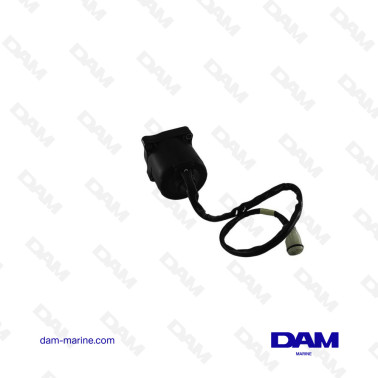
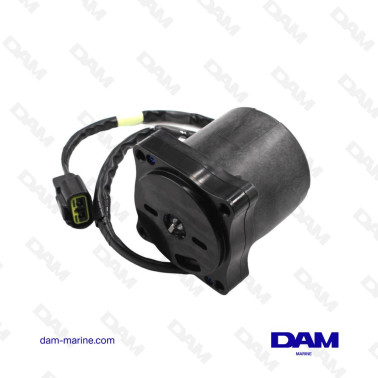
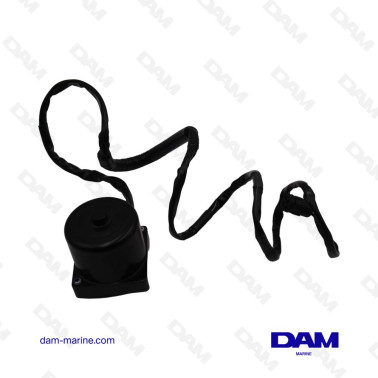
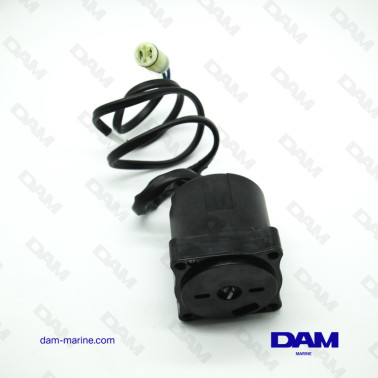
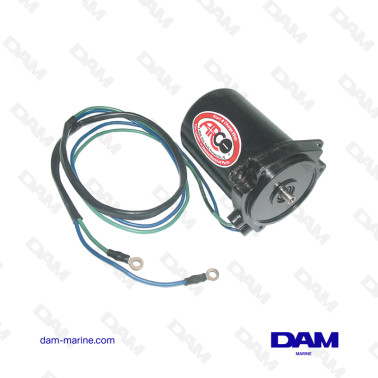
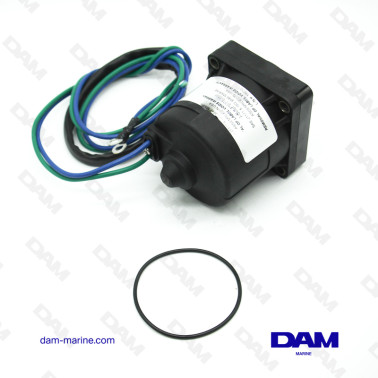
How to choose the right Suzuki trim motor?
The Suzuki OEM reference remains the main criterion for selecting a compatible trim motor. Two outboards with similar horsepower can use different setups depending on the year, serial number, shaft type and hydraulic unit version.
Before ordering, always check:
- the original Suzuki reference shown on the part or indicated in the exploded view;
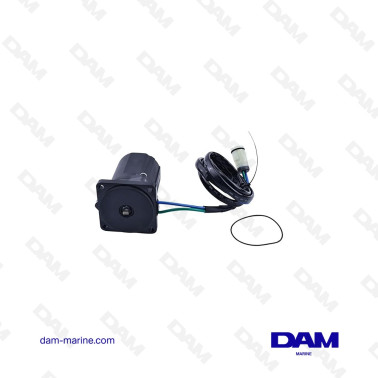
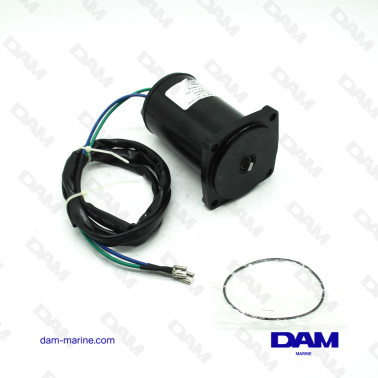
- the connector type: generally 2 wires on many setups, but this must be confirmed;
- the mounting: number of screws, plate diameter and screw spacing;
- the length and diameter of the drive shaft;
- the exact outboard model, its year and serial number.
Important: the compatibilities below are indicative. Suzuki used several setups depending on DF and DT generations. If in doubt, always check the OEM reference or contact us with the engine serial number.
Examples of common Suzuki OEM references
| Suzuki OEM reference | Common applications | Points to check |
|---|
| 38100-87J11 / 38100-87J20 |
Suzuki DF40 and DF50 depending on year and version |
Connector type, 4-screw mounting, screw spacing and serial number |
| 38100-99E01 |
Suzuki DF60 and DF70 4-stroke depending on model year |
2-wire setup, 4-screw plate and drive shaft |
| 38100-96J00 and variants |
Medium- and high-power Suzuki DF applications depending on version |
Compatibility to be confirmed using the exact reference |
| 38100-96J01 / 38100-92J02 / 38100-93J01-02 |
Suzuki DF115, DF150, DF175, DF200 and similar models depending on year |
Hydraulic unit type, connector type and mounting |
| 38100-92E20 |
Suzuki DT90, DT100 and some 2-stroke DT150 to DT225 models |
OEM reference, connector type and engine generation |
| 38100-87D10 / 38100-87E20 |
Suzuki DT150 to DT225 V4/V6 2-stroke depending on version |
Exact setup to be checked before ordering |
How to identify a Suzuki trim fault?
- The trim no longer responds: first check the battery, fuses, relays, control switches and electrical connections. A completely silent system does not always mean the trim motor has failed.
- The electric motor runs but the outboard does not move: the hydraulic oil level may be too low, the manual release screw may be loose, or the coupling between the electric motor and pump may be damaged.
- The trim works intermittently: oxidised terminals, a weak relay or water ingress into the electric motor housing can cause random cut-outs.
- Oil around the hydraulic unit: a leak around the seals, cylinders or reservoir must be dealt with quickly to prevent oil loss and pump damage.
- Cloudy oil or a “mayonnaise” appearance: this often indicates water in the hydraulic circuit. Draining and checking the seals is then necessary.
Replacing a Suzuki electric trim motor
On many setups, the electric trim motor can be replaced without removing the entire hydraulic unit. Access may vary depending on engine horsepower, available space on the bracket and the condition of the fasteners.
- Secure the outboard: raise the engine fully, lock it onto its mechanical safety support and disconnect the electrical supply.
- Identify the wiring: photograph or mark the wires before removal to keep the correct connection direction when refitting.
- Remove the mounting screws: unscrew the trim motor plate carefully, especially if the fasteners are oxidised.
- Remove the old motor: check the condition of the shaft, seal and mounting surface.
- Install the new motor: replace the seal if necessary, tighten the screws correctly and reconnect the wires.
- Check operation: test raising and lowering, then check the level and condition of the hydraulic oil.
Warning: never work under an outboard held only by the hydraulic system. Always use the mechanical safety support or a suitable stand.
Maintaining the Suzuki trim system
Regular maintenance greatly reduces trim failures, especially in saltwater use. After each trip, rinse the engine with fresh water and operate the trim several times to remove salt from around the cylinder rods and pivot points.
- Check the hydraulic oil level at least once per season.
- Watch for leaks around the cylinders, reservoir and hydraulic unit.
- Grease the shafts, trunnions and pivot points with suitable marine grease.
- Protect electrical terminals and connectors against oxidation.
- Replace damaged seals quickly to prevent water from entering the circuit.



 Catalog
 Exploded views
















 Honda Marine








 Parts views
 Technical documents
 Ask for a quote
 Return request