How can you diagnose a Yamaha carburettor fault on your outboard?
On a marine engine, most carburation problems come from fuel degradation, which leaves varnish deposits, or from corrosion. Before dismantling everything, symptom analysis helps determine whether simple cleaning is enough or whether an overhaul kit is required.
What are the symptoms of a blocked jet?
This is the most common fault, often caused by fuel ageing, especially unleaded E10, during winter storage.
- The idle jet: its passage is very fine. The slightest impurity makes the idle unstable or causes the engine to stall when shifting into forward or reverse. If you need to use the choke to keep the warm engine running, this jet is usually responsible.
- The main jet: it controls high rpm. If it is blocked, the engine runs roughly, hesitates under acceleration or no longer reaches maximum rpm. Professional tip: never try to unblock a jet with metal wire, as you may alter its calibration. Use an ultrasonic cleaner or replace it.
How do you spot a faulty needle valve?
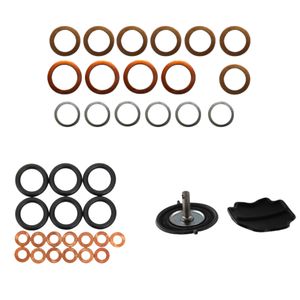
The needle valve regulates the fuel level in the float bowl. If it no longer closes correctly, fuel overflows. The signs are clear: the engine floods, there is a strong smell of petrol, and the spark plugs are black and wet. If the rubber-tipped needle shows a wear mark, replacing it with a carburettor kit is essential.
What should be checked around the Yamaha carburettor?
The carburettor depends directly on its surrounding components. Working on it without checking the rest of the fuel circuit limits the effectiveness of your repair.
Why check the upstream fuel circuit?
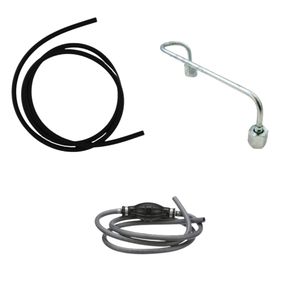
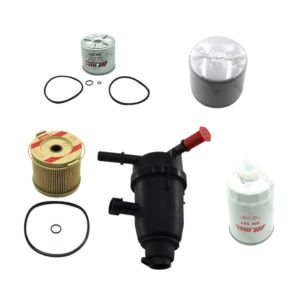
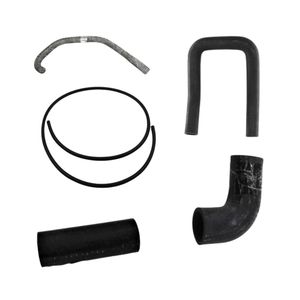
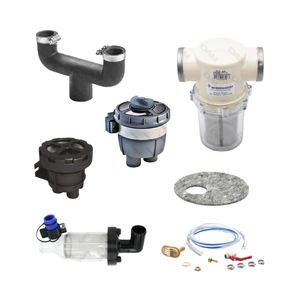
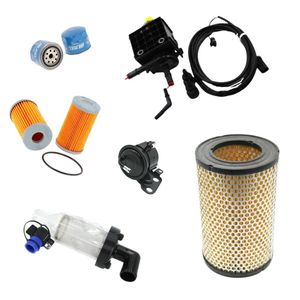
Check the condition of your primer bulb and hoses. Above all, inspect your water-separating filter: water is the first enemy of your injection or carburation system. Regular filter replacement protects your carburettors over the long term.
What is the role of base gaskets and thermal spacers?
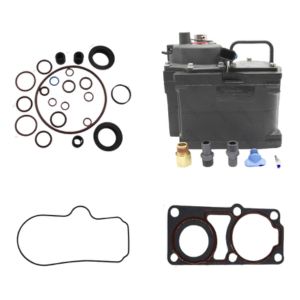
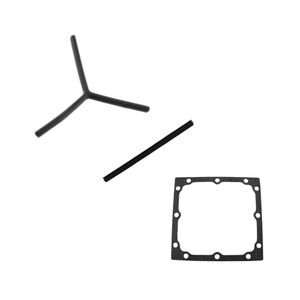
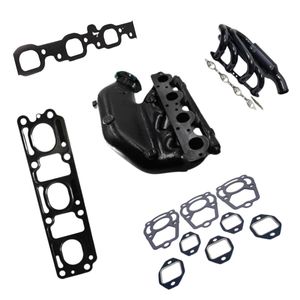
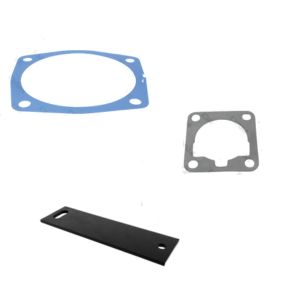
An air leak between the carburettor and the intake manifold leans out the mixture, raises idle speed and makes the engine run hot. Whenever the carburettor is removed, replacing the base gasket is strongly recommended. Respect the tightening torques so that the mounting flange is not warped. Do not forget to reinstall the thermal spacers: they prevent heat from the engine block from boiling the petrol in the bowl.
2-stroke or 4-stroke: what setting differences should you know?
Although the principle remains the same, tolerances and maintenance methods differ according to the cycle of your Yamaha engine.
Specific features of Yamaha 4-stroke carburettors
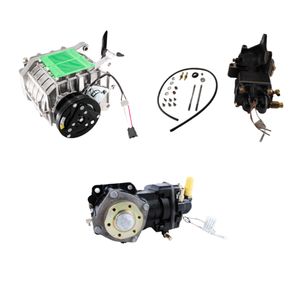
To meet anti-pollution standards, 4-stroke engines are set very lean. The mixture screw setting is extremely precise. These carburettors often include an accelerator pump to provide clean acceleration. On multi-cylinder 4-strokes, such as F50 or F100 engines, synchronising the bank with a vacuum gauge after reassembly is essential to ensure steady idle.
Specific features of Yamaha 2-stroke carburettors
The design is simpler, but synchronisation remains essential on engines with several carburettors. On a 2-stroke engine, mechanical synchronisation is most often performed by aligning the simultaneous opening of the throttle butterflies. A single misadjusted carburettor unbalances the entire block.



 Catalog
 Exploded views

















 Honda Marine









 Parts views
 Technical documents
 Ask for a quote
 Return request