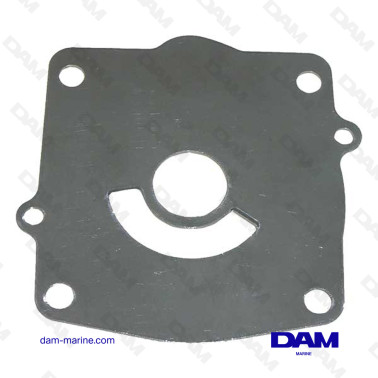
What are the signs of a failing Yamaha water pump?
Three symptoms should lead to immediate removal of the lower unit.
- The tell-tale stream weakens or disappears. This is the first and most reliable sign. A stream that becomes soft, intermittent or thinner than usual indicates a drop in flow. Be careful, however: a missing stream can also be caused by a simple blockage in the tell-tale outlet, to be checked with nylon line before removing the lower unit.
- The overheat alarm triggers, often first at high rpm. A partially worn impeller may be sufficient at idle and then fail under load, when flow demand increases. An engine that overheats only during sustained cruising points more towards the pump than the thermostat.
- The engine has run dry, even briefly. Neoprene handles friction without water very poorly: a few dozen seconds are enough to melt the tips of the blades. After a dry start, even without immediate symptoms, the impeller must be replaced.
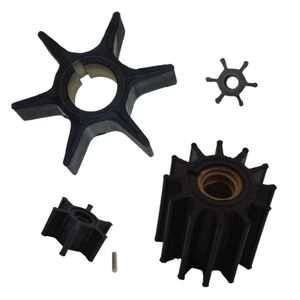
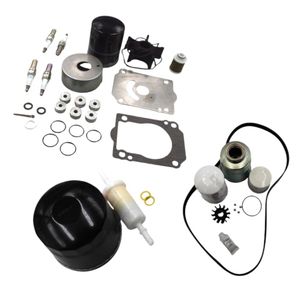
Should you choose the impeller alone or a complete kit?
The decision is made after opening the pump, based on the condition of the housing and wear plate.
The impeller alone is justified on a freshwater engine with a recent pump housing and an internal surface free from scratches. This is standard routine maintenance.
The complete kit is required as soon as the pump housing is marked. Sand and mud drawn in while cruising abrade the wall and wear plate: on a scratched surface, a new impeller loses its seal within a few dozen hours and the benefit of replacement is lost. In salt water, corrosion of the mating surface makes gasket renewal necessary in any case.
In practice, from the second impeller fitted to the same pump housing, the complete kit is the rational choice.
What precautions should be taken during replacement?
The operation requires removing the lower unit. A few points determine the service life of the new part:
- Respect the rotation direction. The blades must be inserted folded in the direction of shaft rotation. An impeller installed backwards works against its natural direction and deteriorates very quickly.
- Never use mineral grease. Petroleum-based products attack neoprene. To ease insertion, soapy water or glycerine is enough.
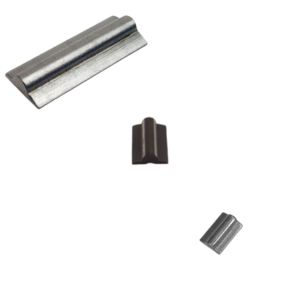
- Check the key and its slot. A flattened key or an ovalised slot on the shaft allows the impeller to slip under load.
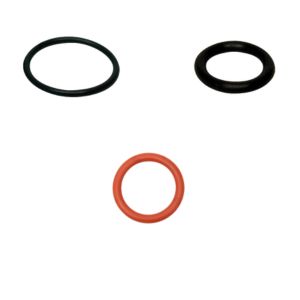
- Check the water tube seal at the mating surface between the lower unit and the engine block. A hardened seal allows part of the flow to drop back and recreates the symptoms of a worn pump.
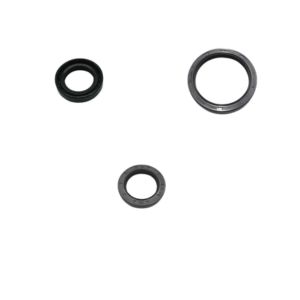
- Use the removal to check the lower-unit oil. Emulsified or milky oil indicates water ingress through the propeller-shaft oil seals, to be dealt with during the same intervention.


 Catalog
 Exploded views

















 Honda Marine








 Parts views
 Technical documents
 Ask for a quote
 Return request