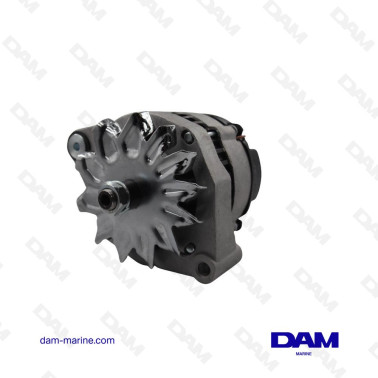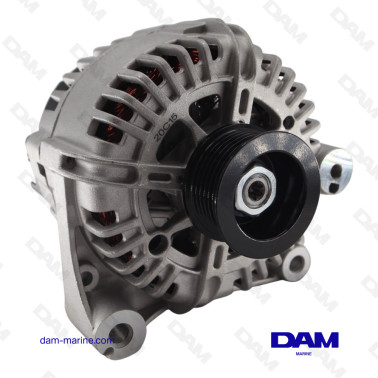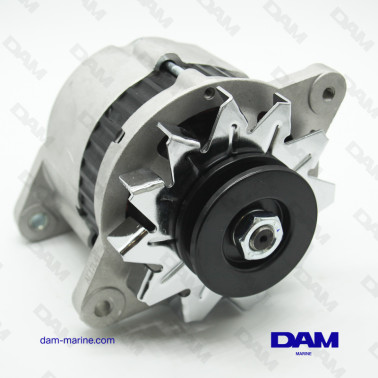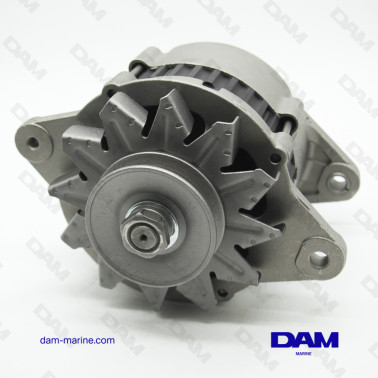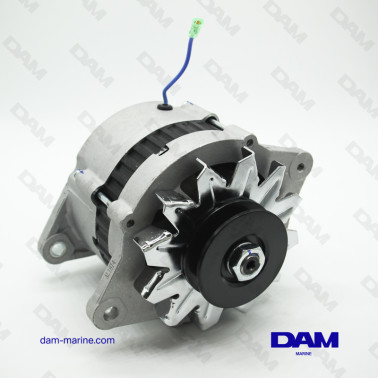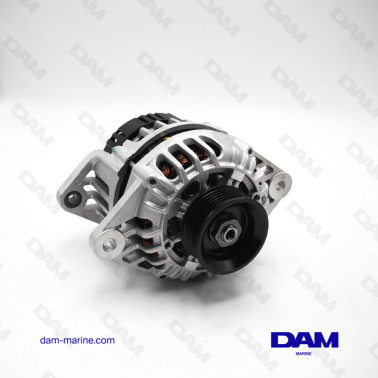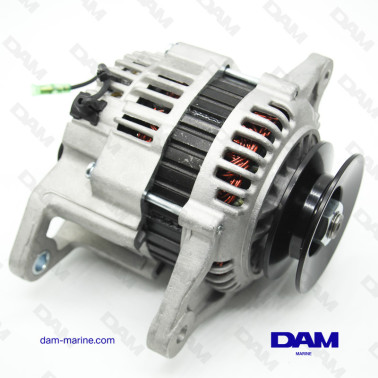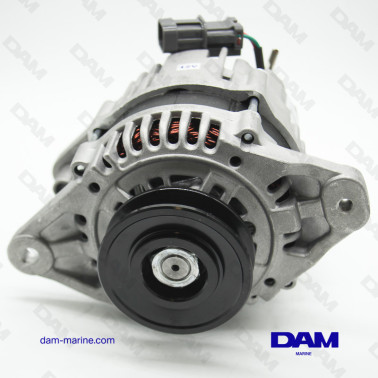

How do you identify the correct alternator reference?
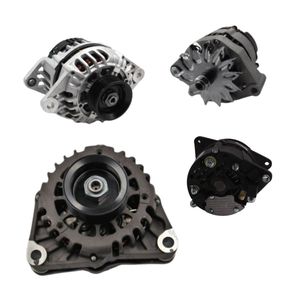
The most reliable method is to read the reference engraved on the body of your old alternator. On Yanmar engines, you will mainly encounter two situations:
- Original Hitachi fitment: Yanmar equips most of its blocks with Hitachi alternators, easily identified by a reference beginning with LR. This is the safest route for plug-and-play installation.
- Quality alternatives such as Valeo: major equipment manufacturers offer replacement models that strictly respect the original charging curves and mounting centre distances, providing an excellent budget-friendly alternative.
Which technical criteria should be checked before purchase?
Before confirming your basket, take the time to check these three essential mechanical and electrical points:
1. Voltage and output, or amperage
Most Yanmar circuits operate at 12 V. In terms of output, capacity ranges from 35 A for small engines to more than 125 A. Important: never undersize your alternator in relation to the size of your battery bank. An alternator that is too weak will run under constant overload while trying to recharge a large bank, causing overheating and melting of the stator.
2. Mounting type: isolated ground or case ground?
This is a crucial point in marine use. While most standard engines use a case ground, where the alternator body contacts the engine block, some installations require an isolated bipolar ground. This is often the case on aluminium or steel hulls to prevent galvanic corrosion. Check the wiring type of your original installation.
3. Pulley profile
Alignment with the crankshaft must be perfect. Check your engine drive type: single-groove V-belt pulley or flat multi-rib poly-V pulley. The wrong pulley profile will cause belt slip, overheating and premature bearing failure.
How can you recognise a faulty alternator?
Before blaming the alternator, always check the condition of your connections and the tension of your belt. If in doubt, these are the classic symptoms of a fault:
- Voltage drop: voltage below 13.5 V at the battery terminals when the engine is running at cruising speed.
- Warning signals: the battery warning light stays permanently lit on the dashboard.
- Mechanical noises: a dull rumble or intense metallic whistling, indicating a seized internal bearing or a short-circuited diode bridge.
Mechanic's tip: use the removal operation to inspect the engine environment. A seawater pump leak or oil seepage dripping onto the alternator is often the root cause of its failure. Fix the leak before installing the new part.